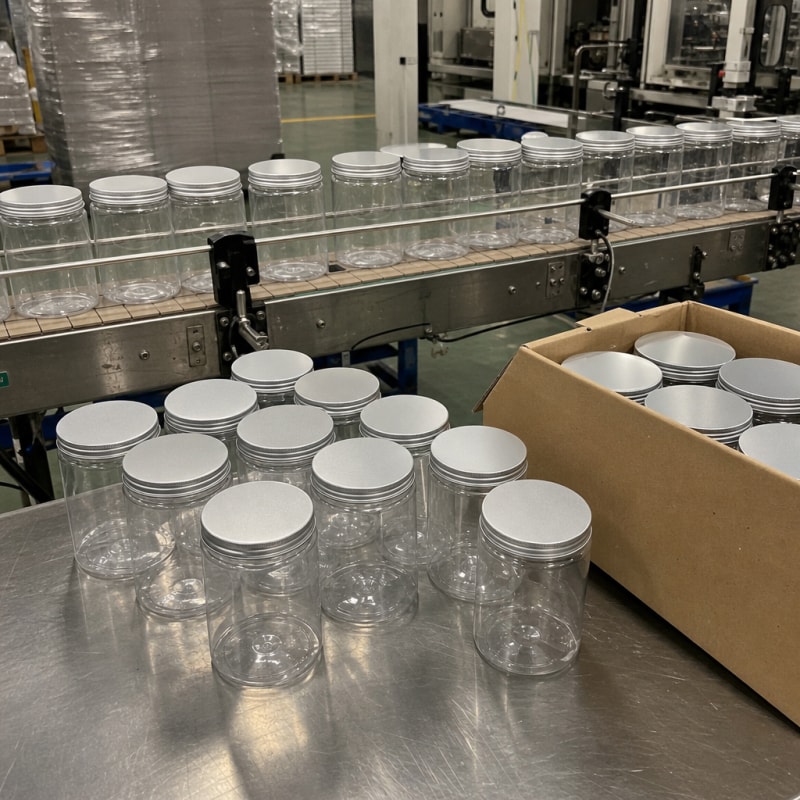



Clear PET Food Jar with Aluminum Lid
Product Attributes
| Attribute | Selection Reference |
| Product | Clear PET Jar with Aluminum Lid |
| Grade coverage | Food-contact packaging; compliance confirmed by destination and application |
| Chemical identity | PET body with aluminum or aluminum-faced closure system |
| Typical appearance | transparent rigid jar in customized volume and neck finish |
| Main specification points | Nominal capacity; brimful volume; neck finish; jar weight; wall thickness; closure/liner; migration compliance |
| Packing options | nested or partitioned in PE-protected export cartons; lids packed separately or fitted as agreed |
Specification note: Use these attributes to prepare an inquiry. Final acceptance criteria are recorded in the order specification.
Product Description
Clear PET Jar with Aluminum Lid is supplied for buyers who need a practical balance between chemical consistency, plant handling, and application performance. The offered Food-contact packaging; compliance confirmed by destination and application material is presented as transparent rigid jar in customized volume and neck finish. Its role is best evaluated against the customer’s process rather than by a single assay number: feed method, temperature, contact time, companion ingredients, and downstream limits can all affect the result.
Material Profile and Production
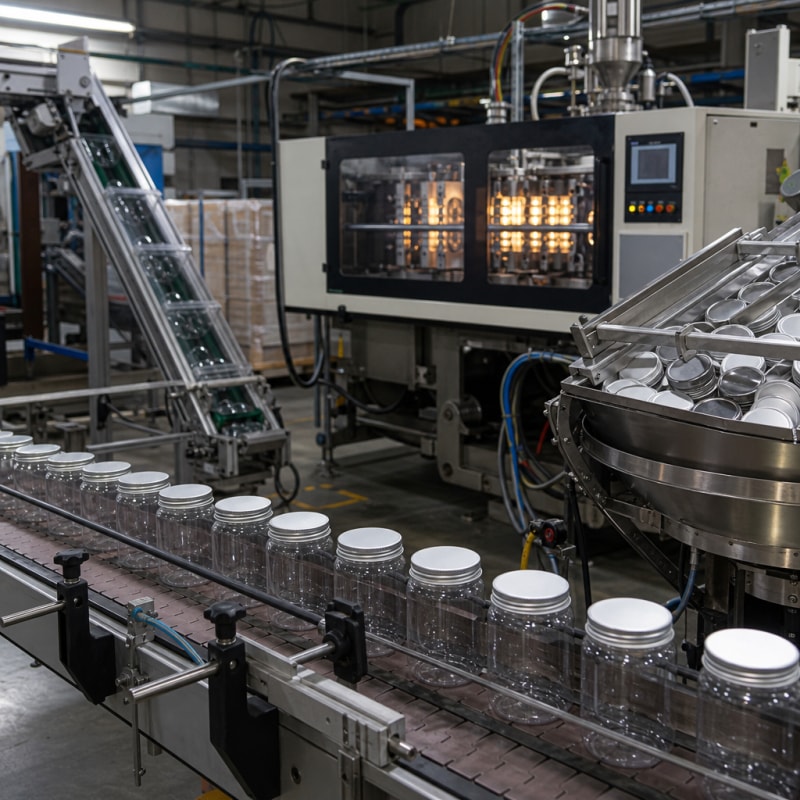
Manufacture uses food-contact PET resin is dried and injection stretch blow molded; jars are inspected, paired with matched closures, cleaned or protected, and packed. The finishing stage is especially important because physical form can influence feeding and contact with other materials. Production records connect the chosen raw-material lots with operating conditions and the final pack code, giving the buyer a practical route for investigating unexpected plant results.
Key Applications and Process Value
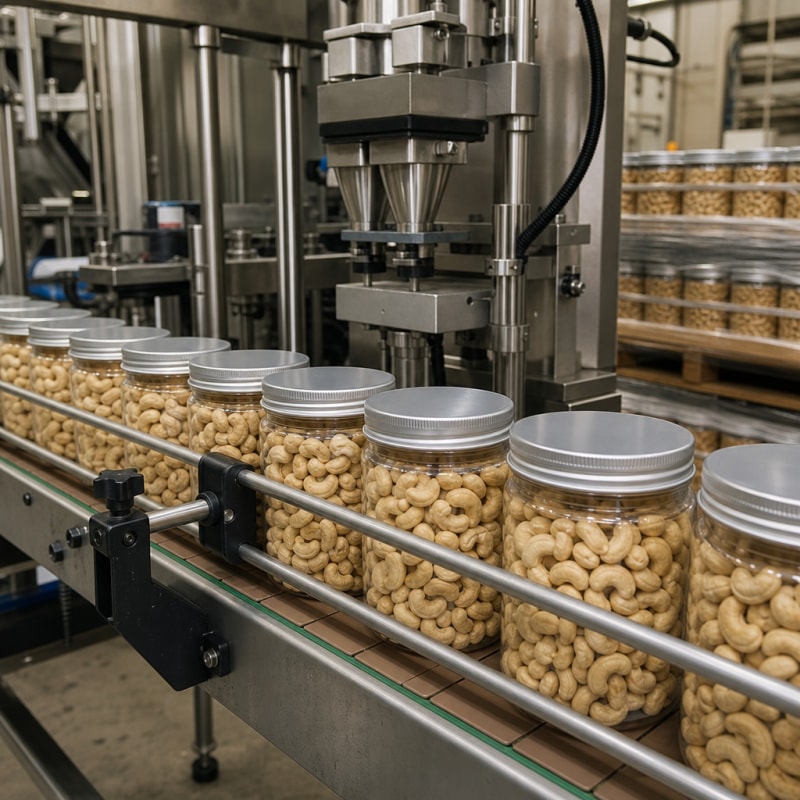
Relevant demand comes from nuts, candy, spices, tea, dried fruit, nutrition powders, cookies, condiments, and other dry or compatible foods. Within those fields, two customers may need quite different properties from the same chemical family. Share the substrate, recipe or stream condition, present dosage, and failure mode when requesting grade guidance; this makes the subsequent trial more focused and the acceptance decision easier to defend.
Qualification should consider the entire operating window, including startup, normal operation, and temporary deviations. Compatibility with construction materials, other ingredients, recovery systems, and wastewater treatment deserves review before routine purchasing begins.
Quality Assurance and Buyer Qualification
Routine approval focuses on dimensions, capacity, weight, transparency, gate and wall appearance, neck fit, closure torque, leakage, drop or top-load behavior, odor, and relevant migration documentation. The release decision also verifies package identity and condition. A sample COA can be used to align parameter names and units, but it does not replace the signed specification governing the actual order.
Safe Handling and Storage
Confirm filling temperature, oxygen and moisture barrier needs, food type, shelf life, closure liner, induction seal, and recycling label before approval. PET is not suitable for every hot-fill, retort, or solvent-rich application. Do not remove hazard marks or reuse an empty package without an approved procedure. The user is responsible for engineering controls, protective equipment, hygiene, exposure assessment, and lawful disposal based on its actual operation and jurisdiction.
Packaging, Shipping, and Service
Available packing includes nested or partitioned in PE-protected export cartons; lids packed separately or fitted as agreed. Loading is planned around pack dimensions, cargo classification, route, and receiving limitations. Buyers should list required labels and certificates with the inquiry. A commercial confirmation then records shipment timing, settlement, document set, and the procedure for reporting transit damage or quality concerns.
Product data can support screening and sample selection, while the receiving organization controls formulation, operating limits, and market authorization.