

Clean Label Soy Dietary Fiber for Food Texture
Product Attributes
| Attribute | Selection Reference |
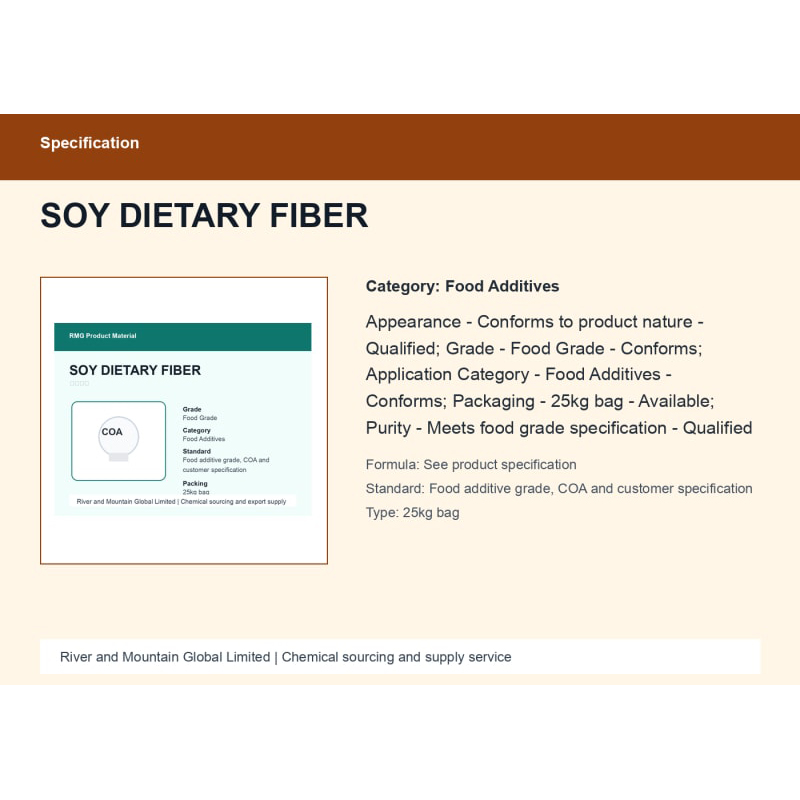
| Product | Soy Dietary Fiber |
| Grade coverage | Food grade |
| Chemical identity | Plant-derived insoluble and soluble fiber complex |
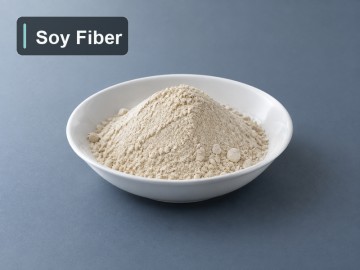
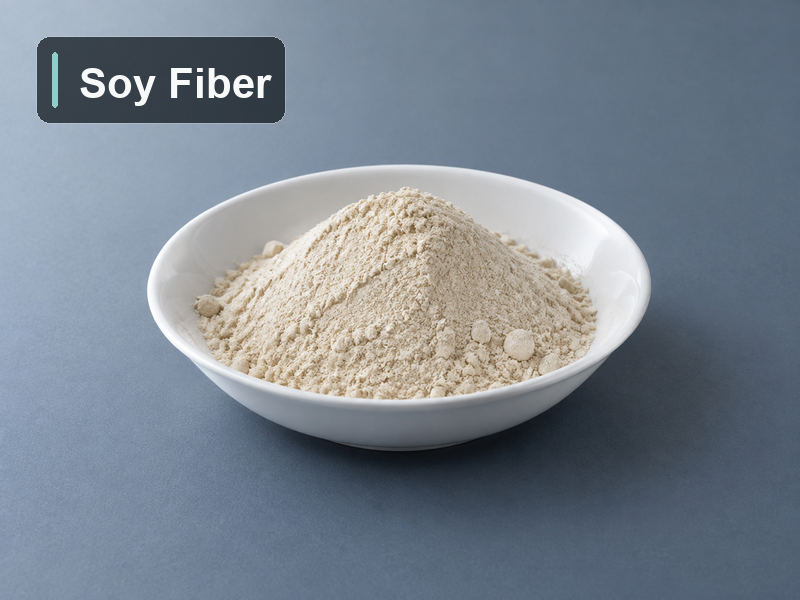
| Typical appearance | light cream, free-flowing powder |
| Main specification points | Total dietary fiber; moisture; ash; particle size; microbiological limits; allergen status |
| Packing options | 10 kg or 20 kg food-grade multiwall bags with sealed PE liners |
Specification note: Commercial grades can differ by producer and market. Only the mutually approved limits form part of the sale.
Product Description
For processes where raw-material variation quickly becomes lost yield, Soy Dietary Fiber offers a controlled and traceable input. The contracted grade is Food grade, with a normal appearance of light cream, free-flowing powder. Specification selection starts with the intended use, then narrows the critical chemistry and physical properties that influence storage, dosage, reaction rate, and finished-product acceptance.
Material Profile and Production
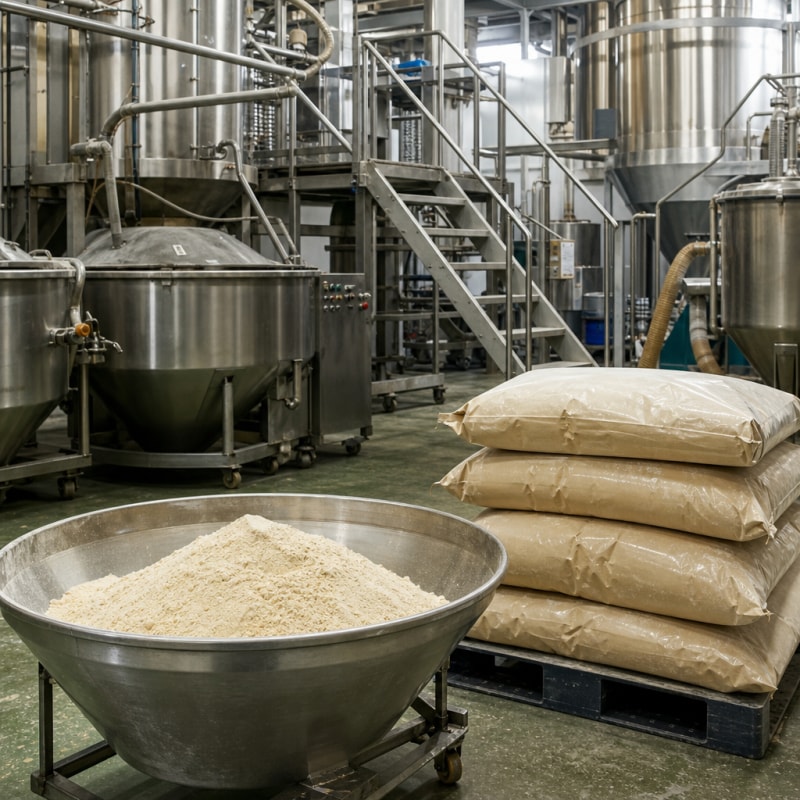
At production scale, the material is obtained by food-grade soy material is cleaned, fractionated, heat treated, dried, and milled to a controlled particle profile. Intermediate checks guide the timing of separation and finishing. After the product reaches its required form, it is protected from conditions that could change its moisture, chemistry, or appearance. Pack labels preserve the link between the sale unit and its release data.
Key Applications and Process Value
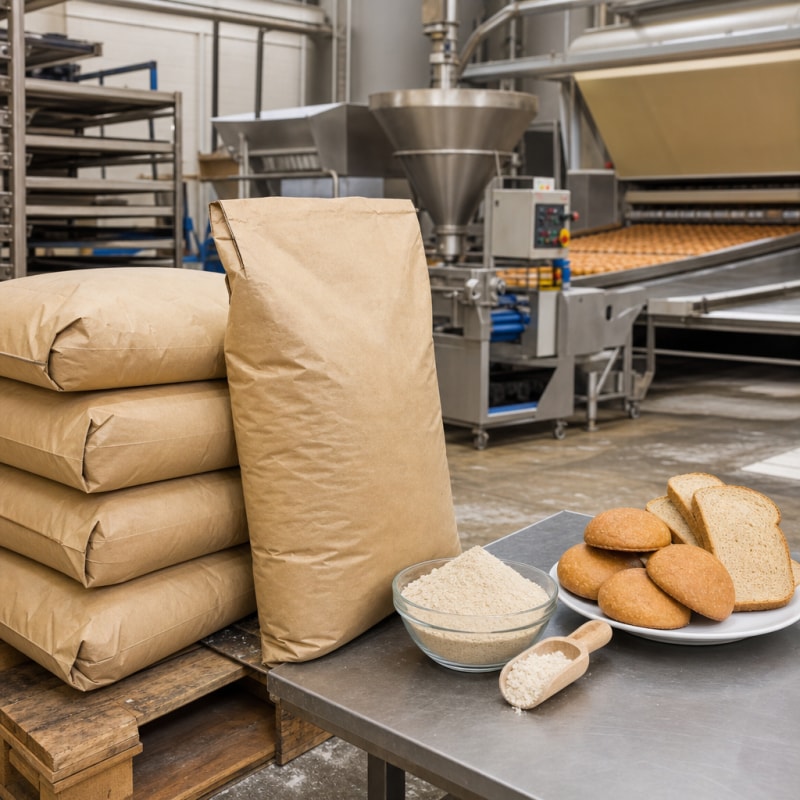
Potential process routes include bakery fillings, meat analogues, nutrition products, sauces, beverages with suspended solids, and moisture-managed prepared foods. The commercial choice should be driven by a stated technical objective and its measurement method. Begin with a representative sample, document the operating conditions, and retain the comparison result so purchasing and production can use the same evidence when the material moves to routine supply.
Where multiple grades appear suitable, side-by-side testing under identical conditions gives the clearest comparison. Keep a sealed reference portion and note its lot number, since it can help distinguish raw-material effects from changes elsewhere in the production line.
Quality Assurance and Buyer Qualification
Batch documentation brings together process completion and results for fiber content, moisture, ash, color, odor, particle size, bulk density, microbiological indicators, and documented allergen management. Deviations are evaluated before disposition. For applications in which a small change has a large effect, the customer’s incoming inspection and a mutually understood change-notification arrangement add valuable protection.
Safe Handling and Storage
Keep the inner liner closed to avoid moisture pickup and odor transfer. Soy is a regulated allergen in many markets; declare it correctly and validate the intended recipe and claim with local regulations. Transfer equipment and containers must be compatible with the ordered grade. Inspect damaged packs before movement, keep incompatible materials separated, and train operators to follow the SDS and local occupational rules during sampling, charging, housekeeping, and waste collection.
Packaging, Shipping, and Service
Packing options are 10 kg or 20 kg food-grade multiwall bags with sealed PE liners. The dispatch team checks quantities and marks against the order and selects carriers suited to the cargo. Tell us early about language rules, shelf-life-on-arrival, pallet fumigation, or consignee document formats, as late changes can delay customs preparation and loading.
The supplier can clarify available grades and reporting. Responsibility for recipe, installation, operating procedure, and lawful finished use stays with the buyer.