When you’re picking an Ultrafiltration Water Treatment system, start with the water source—not the shiny equipment brochure. Well water, surface water, and recycled water all come with different risks. And yeah, a sample that looks crystal clear can still contain bacteria, colloids, and suspended particles. Ultrafiltration uses hollow-fiber membranes with extremely small pores. It can reduce turbidity and many microorganisms without directly adding disinfectant at the membrane stage.
Dr. Peter Gleick, President Emeritus of the Pacific Institute, once put it this way: “The world’s water crisis is not a crisis of scarcity, but a crisis of management.” That idea applies to filtration design, too. A practical system needs suitable pretreatment, controlled pressure, regular backwashing, and performance checks you actually document. Companies such as DuPont and Pentair develop membrane technologies, sure—but no brand can replace a proper site evaluation. That part really matters.
For an Rv Water Treatment application, compact ultrafiltration can help deliver clearer water when space is limited. Operators may inspect a transparent prefilter housing, record pressure readings, and notice a gradual flow decline before failure. Those little details improve maintenance decisions. Still, ultrafiltration does not remove every dissolved salt, chemical, or contaminant. You may need additional treatment.
The choice should consider feed-water testing, daily demand, membrane replacement costs, energy use, and local service access. Experience shows that simple systems often perform better when operators understand them. There’s no perfect setup. Even a well-designed system can underperform when cleaning schedules are ignored. That honest limitation deserves attention. A reliable Ultrafiltration Water Treatment plan balances filtration efficiency, verified data, practical maintenance, and the real conditions where the system will actually operate.
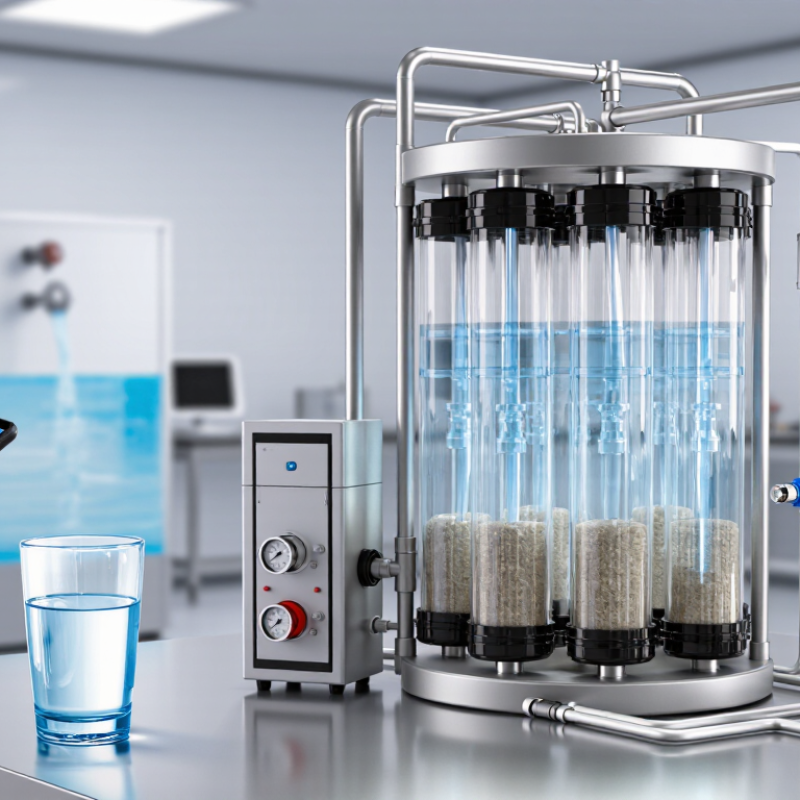
An ultrafiltration water treatment system uses pressure to push water through hollow-fiber membranes. These membranes commonly have pores near 0.01 microns, according to the U.S. EPA Membrane Filtration Guidance Manual. The barrier can reduce suspended solids, colloids, bacteria, and protozoa. It also improves visible clarity. A clear glass matters to users.
Ultrafiltration does not remove most dissolved salts, hardness, or many small organic molecules. That limitation is important. Reverse osmosis, often called Ro Water Treatment, may be more suitable for desalination. The World Health Organization and UNICEF reported that 2.2 billion people lacked safely managed drinking water in 2022. This figure, published in the 2023 Joint Monitoring Programme report, shows why dependable treatment design remains necessary.
In practical operation, pretreatment protects the membrane from sand, oil, and sudden turbidity spikes. Operators should monitor pressure differences, flow decline, and cleaning frequency. A system may look simple, yet poor maintenance can reduce performance quickly. It is not a perfect barrier. EPA guidance also stresses validated performance, site-specific testing, and continuous monitoring for microbial treatment claims. A modest pilot test can reveal problems that a brochure cannot.
Ultrafiltration membranes remove contaminants through physical separation. Their pores commonly measure about 0.01 to 0.1 micrometers, according to the U.S. EPA Membrane Filtration Guidance Manual. This scale can retain suspended solids, bacteria, protozoa, and many larger viruses. Dissolved salts usually pass through. That limitation matters.
Inside an Edr Water Treatment system, pressurized water crosses thousands of hollow fibers. A clear stream enters; particles collect on the membrane surface. Regular backwashing reverses flow and loosens the captured layer. The World Health Organization’s Guidelines for Drinking-water Quality emphasizes that microbial removal depends on membrane integrity, operation, and monitoring. A broken fiber can quietly reduce protection.
Field performance is rarely perfect. Turbidity, organic matter, and poor cleaning can increase fouling and pressure loss. Operators often track turbidity, transmembrane pressure, and integrity-test results together. EPA guidance supports continuous process control rather than relying on one reading. The numbers tell a story. Yet even careful systems need realistic validation against local contaminants. Ultrafiltration does not reliably remove every dissolved chemical, pesticide, or salt. Pretreatment may therefore include screening, coagulation, activated carbon, or another membrane process. The final design should follow laboratory testing, source-water analysis, and verified operating data.
Why Choose Ultrafiltration Water Treatment Systems?
Which Water Sources Suit Ultrafiltration Treatment?
Ultrafiltration suits water containing suspended solids, colloids, bacteria, and many larger pathogens. Typical sources include rivers, lakes, reservoirs, and collected rainwater. These sources often carry visible sediment after storms. A properly selected membrane can produce clear water with stable turbidity levels.
Groundwater can also suit ultrafiltration when iron, manganese, or fine particles create treatment problems. However, clear well water is not automatically suitable. Dissolved salts, hardness, nitrate, and some chemicals can pass through ultrafiltration membranes. Laboratory testing should guide the design. Guesswork becomes expensive quickly.
In practical assessments, operators usually check turbidity, temperature, organic matter, and microbial quality across different seasons. Seasonal changes matter. A river may look calm in winter, then carry heavy silt after summer rain. Pretreatment, such as screening or coagulation, can protect the membrane and reduce cleaning frequency. Still, no system performs perfectly. I have seen designs focus on membrane capacity while overlooking dirty source-water peaks. That assumption is easy to make, and often wrong.
Ultrafiltration is especially useful as pretreatment for reverse osmosis, industrial process water, and some municipal reuse applications. It can reduce the load on downstream equipment and provide a physical barrier against many microorganisms. Safe operation also depends on integrity testing, pressure monitoring, cleaning procedures, and qualified water analysis. A source that appears suitable on paper may need pilot testing before full-scale installation.
| Water Source | Typical Water Quality | UF Suitability | Main Treatment Benefits | Recommended Pretreatment | Important Limitations |
|---|---|---|---|---|---|
| Rivers and Lakes | Variable turbidity, suspended solids, algae, natural organic matter and microorganisms. | Highly suitable | Produces low-turbidity water and provides a physical barrier for bacteria, protozoa and suspended particles. | Coarse screening, fine screening, coagulation when required, and periodic cleaning. | Dissolved salts, many dissolved chemicals and some viruses may pass through; additional treatment may be necessary. |
| Groundwater | Usually low in suspended solids, but may contain iron, manganese, hardness, dissolved gases or site-specific contaminants. | Suitable in selected cases | Removes fine particles and microbial contaminants when surface contamination or well development affects water quality. | Iron and manganese oxidation or removal, aeration, cartridge filtration, and hardness control when needed. | UF does not reliably remove dissolved iron, manganese, hardness, nitrate, arsenic or salts without an additional process. |
| Rainwater | Generally low mineral content, with possible roof debris, dust, organic matter and microbial contamination. | Suitable | Improves clarity and reduces suspended particles and microorganisms for non-potable or suitably disinfected applications. | First-flush diversion, leaf screening, storage-tank protection and sediment filtration. | A final disinfection step and compliance testing are important when water is intended for drinking. |
| Municipal Tap Water | Typically disinfected and regulated, with low turbidity but possible residual particles, pipe corrosion products or microorganisms after distribution. | Suitable for polishing | Provides additional particulate and microbial reduction for point-of-use or process-water applications. | Sediment prefilter and activated carbon when taste, odor or chlorine reduction is required. | It will not normally reduce total dissolved solids, hardness or most dissolved chemicals. |
| Municipal Wastewater | Contains residual suspended solids, microorganisms, organic matter, nutrients and dissolved contaminants after biological treatment. | Highly suitable after biological treatment | Produces consistent tertiary effluent for reuse such as irrigation, cooling or toilet flushing. | Effective biological treatment, screening, grit removal, equalization and adequate disinfection. | UF does not remove all dissolved nutrients, salts, pharmaceuticals or other dissolved micropollutants. |
| Industrial Process Water | Quality varies widely; may contain suspended solids, emulsified oils, colloids, pigments or process chemicals. | Suitable after source assessment | Separates colloids, macromolecules and many emulsified materials for water reuse or pretreatment before reverse osmosis. | Oil removal, pH adjustment, chemical compatibility checks, equalization and fine screening. | Membrane selection must match the chemicals, temperature, viscosity and fouling potential of the process stream. |
| Seawater | High salinity, suspended particles, marine organisms, organic matter and possible oil contamination. | Suitable mainly as pretreatment | Reduces suspended solids and microorganisms before desalination by reverse osmosis. | Intake screening, coagulation when needed, dissolved air flotation or media filtration for difficult feed water. | UF does not remove dissolved sodium chloride; it cannot produce fresh water from seawater as a standalone process. |
| Brackish Water | Moderate salinity with variable turbidity, hardness, iron, manganese and dissolved solids. | Suitable as pretreatment | Protects downstream desalination membranes by reducing particles, colloids and microbial loading. | Screening, iron and manganese control, antiscalant management and appropriate cartridge filtration. | A desalination process such as reverse osmosis is required to reduce dissolved salts. |
Selection note: Ultrafiltration is most effective when the main treatment objective is removing suspended solids, colloids, bacteria and protozoa. Feed-water testing, pretreatment design and final disinfection should be considered before selecting a system for drinking-water or water-reuse applications.
Ultrafiltration water treatment systems use membranes with extremely small pores to separate suspended solids, bacteria, and many microorganisms from water. Their main benefit is consistent physical filtration, even when source-water quality changes during the day. Clearer water can support safer downstream treatment and reduce the load on finer purification equipment. Operators can monitor pressure, flow, and turbidity at practical points in the system. Small details matter.
In Pac Water Treatment applications, ultrafiltration can function as a reliable pretreatment or polishing stage. It may reduce cloudiness and help protect reverse osmosis membranes from fouling. However, ultrafiltration does not reliably remove dissolved salts, some chemicals, or every virus without suitable process control. That limitation matters. Engineers should examine feed-water tests, required flow, membrane ratings, and cleaning conditions before selecting equipment. Pilot testing is valuable.
Daily performance depends on more than membrane quality. A pressure gauge that slowly rises may indicate fouling, while falling flow can signal damage or poor cleaning. Regular integrity checks help identify leaks that visual inspection cannot reveal. Pretreatment also deserves attention, especially where oil, hardness, or heavy organic matter is present. A design can look efficient on paper and still underperform in the field. Experienced technicians therefore record operating trends, investigate unusual changes, and adjust maintenance intervals carefully. A perfect schedule rarely exists.
Ultrafiltration offers a useful middle ground between basic filtration and reverse osmosis. Its fine membrane removes suspended solids, bacteria, and many larger particles. However, it generally does not remove dissolved salts, hardness, or small organic molecules. That difference matters. Media filters handle heavier sediment, but they may not provide the same microbial barrier. Reverse osmosis removes more dissolved substances, yet it uses higher pressure and produces a concentrated waste stream. Disinfection can control microorganisms, but it does not physically remove turbidity or dead cells. A well-designed system may combine these methods instead of forcing one unit to do everything.
A practical review should examine feed-water quality, pressure, temperature, and cleaning access. Operators often watch transmembrane pressure because a steady rise can signal fouling. Clear water at the outlet is encouraging, but it does not prove complete membrane integrity. That is an easy mistake. Routine testing remains necessary. Ultrafiltration can also reduce chemical use in some applications, though cleaning chemicals and replacement modules still affect operating costs. The best choice depends on the contaminant profile, required recovery, and available maintenance skills.
Selecting an ultrafiltration system starts with the feed water, not the equipment brochure. The WHO and UNICEF Joint Monitoring Programme reported that 2.2 billion people lacked safely managed drinking water in 2022. Local treatment therefore needs careful risk assessment. Test turbidity, suspended solids, temperature, microbes, and dissolved contaminants before choosing membrane pore size. Ultrafiltration commonly targets particles near 0.01 micrometres, but it does not remove every dissolved chemical.
System capacity should match real demand, including peak flow and seasonal changes. EPA’s Membrane Filtration Guidance Manual highlights integrity testing, pressure control, and validated treatment performance. Operators should review flux, recovery, transmembrane pressure, cleaning frequency, and wastewater handling. A small pressure increase, from 0.8 to 1.2 bar, may signal fouling before production visibly declines. That detail is easy to miss.
Maintenance planning matters as much as initial selection. Install practical pre-filtration where sediment loads fluctuate, and record pressure, flow, turbidity, and cleaning chemicals after every service. Ion Water Treatment projects also need trained operators and clearly defined replacement intervals. A low-energy design may look attractive, yet frequent cleaning can raise labor and water consumption. The assumption can fail. Conditions change. Independent laboratory testing and documented operating records provide stronger evidence than marketing claims, especially when selecting systems for residential, industrial, or decentralized use.
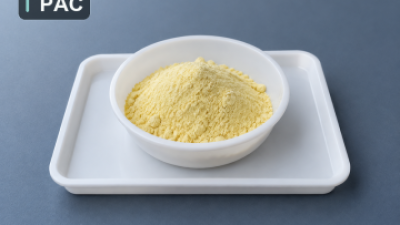
High-efficiency polyaluminium chloride (PAC) is a practical coagulant for producing clearer water under a wide range of clarification conditions. Its pre-polymerized aluminum chemistry promotes rapid floc formation, helping suspended particles gather into larger, denser aggregates that can be removed through sedimentation or filtration. Compared with conventional coagulants, PAC can offer more consistent performance when raw-water quality changes, including variations in turbidity, organic matter, and pH. Jar testing remains essential for selecting the appropriate dosage and confirming settling behavior before full-scale use.
Available in water-treatment, drinking-water, and industrial grades, PAC may be supplied as a pale-yellow to yellow powder or as an amber liquid. The correct grade should match the treatment objective and applicable water-quality requirements. Product evaluation should focus on alumina content, basicity, water-insoluble matter, pH, iron, appearance, and coagulation performance. For drinking-water applications, grade-specific limits for arsenic and heavy metals require particular attention. Consistent inspection of these characteristics supports reliable dosing, stable floc quality, and clearer treated water across changing operating conditions.
Ultrafiltration membranes physically separate suspended solids, bacteria, protozoa, and many larger viruses. Their pores usually measure 0.01 to 0.1 micrometers. Dissolved salts usually pass through.
Usually, no. Ultrafiltration generally does not remove dissolved salts, hardness, or small organic molecules. Another treatment step may be necessary.
Pressurized water flows through thousands of hollow fibers. Clean water passes through the pores. Particles collect on the membrane surface.
Backwashing reverses the water flow and loosens captured particles. It helps control fouling and pressure loss. Poor cleaning can still cause problems.
Operators should track turbidity, flow, transmembrane pressure, and integrity-test results. A steady pressure rise may indicate fouling. One reading is not enough.
No. Clear outlet water does not confirm complete membrane integrity. A damaged fiber may quietly reduce protection. Routine testing remains necessary.
Ultrafiltration uses lower pressure and usually creates less concentrated waste. Reverse osmosis removes more dissolved substances. The better choice depends on water chemistry and treatment goals.
Not always. Ultrafiltration can remove many microorganisms, but it should not automatically replace disinfection. Treatment needs depend on source water and verified performance.
Test the source water first. Review turbidity, organic matter, pressure, temperature, and required recovery. Pilot testing may reveal field problems. Laboratory results can be too optimistic.
Ultrafiltration Water Treatment is a reliable process that uses fine, pressure-driven membranes to separate suspended solids, bacteria, colloids, and other larger contaminants from water. As water passes through the membrane, many unwanted particles are retained while dissolved minerals and smaller molecules may remain, depending on their size and the membrane design. This makes ultrafiltration suitable for municipal supplies, surface water, groundwater, industrial process water, and pretreatment applications.
The main advantages include consistent filtration performance, relatively low chemical use, compact equipment, and straightforward operation. Compared with conventional sediment filtration, ultrafiltration can provide a finer and more stable barrier, while often requiring less energy than processes designed for dissolved salt removal. Choosing the right system depends on source-water quality, required flow rate, contaminant characteristics, membrane configuration, and available maintenance resources. Regular monitoring, cleaning, and timely membrane replacement are essential for maintaining efficiency, extending service life, and ensuring reliable water quality.