Leave Your Message
Choosing biological water treatment can really shift how a facility handles wastewater, energy use, and long-term operating risk. Instead of leaning only on intensive chemical treatment, this approach lets microorganisms break down biodegradable pollutants under controlled conditions. It looks a lot like nature doing its thing, but it still takes careful engineering.
Good operators don’t just stare at lab results. They watch oxygen levels, temperature, pH, sludge texture, and flow changes during actual production hours. A sudden cleaning cycle can throw the microbes off. And a quiet tank can still be hiding a serious imbalance. Often, small observations are what keep bigger failures from happening.
Biological water treatment may cut chemical demand and support more stable discharge performance. It can also help facilities handle wastewater that changes strength over time. But it’s not a one-size-fits-all fix. High toxicity, fluctuating loads, tight space, or weak maintenance can all limit how well it works. A pilot test can expose weak spots before full installation — and that step gets skipped way too often.
Reliable decisions should pull together site surveys, sampling data, process modelling, and operator experience. Qualified engineers can compare aeration systems, biological media, clarifiers, and monitoring controls. They should also explain maintenance needs in plain, practical terms. The best design isn’t always the most complicated one. It’s the design the facility can actually run consistently.
For facilities reviewing Rv Water Treatment options, biological processes are worth a careful look. Performance depends on local conditions, not pretty promises. Ask for measurable targets, realistic operating costs, and documented service support. A thoughtful review builds confidence — and it leaves room to improve the system once real-world operation starts.
Why Choose Biological Water Treatment for Your Facility?
Why Biological Treatment Fits Facilities: 85–95% BOD Removal Potential
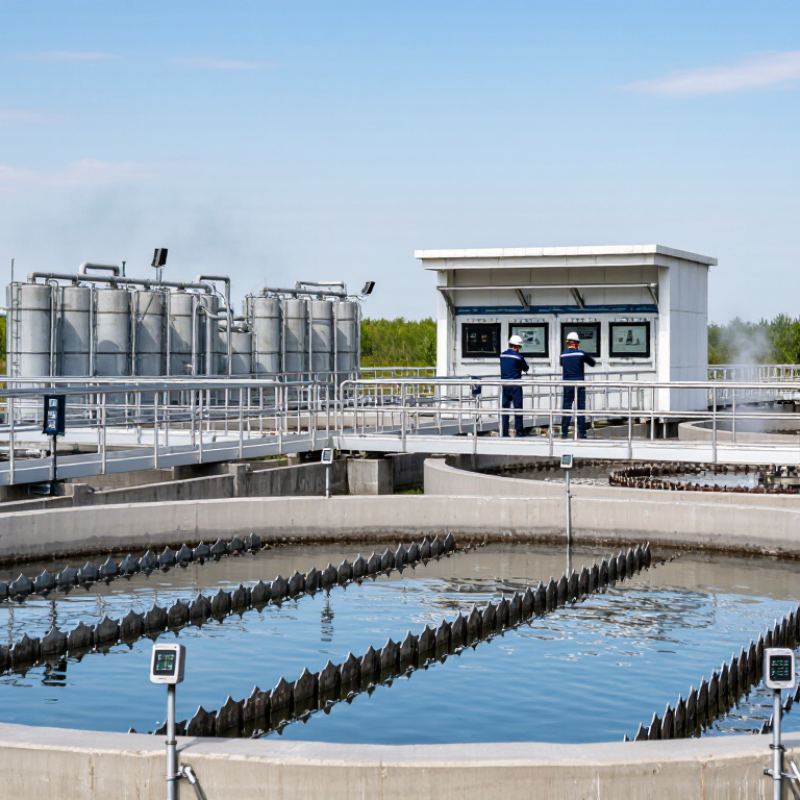
Biological water treatment uses microorganisms to consume biodegradable organic matter in wastewater. With stable loading, suitable oxygen, and balanced nutrients, well-designed systems may achieve 85–95% BOD removal potential. That range is not a guarantee. Temperature, pH, toxic shocks, and sudden production changes can quickly reduce performance. Operators may see this at the outlet: clearer water, less odor, and lower oxygen demand. The result depends on daily control, not equipment alone.
Biological treatment can also support Ro Water Treatment by reducing organic loading before membrane filtration. Cleaner feedwater helps limit fouling and may reduce cleaning frequency. Reliable results require routine sampling, including influent and effluent BOD, dissolved oxygen, suspended solids, and flow. A practical design should reflect actual operating peaks, not only average laboratory data. The attractive percentage can hide weak monitoring. That deserves attention.
Tips: Keep a simple operating log. Record flow, pH, temperature, aeration changes, and unusual discharges. Check trends before making adjustments. Avoid chasing one impressive test result. Three consistent results are more useful. Review sludge condition regularly, and investigate sudden odor or foam instead of masking it. Small corrections often protect biological stability.
| Facility Consideration | Typical Biological Treatment Performance | Why It Fits Facilities | Key Operating Considerations |
|---|---|---|---|
| BOD Removal | 85–95% potential for well-designed and properly operated aerobic systems treating biodegradable wastewater. | Reduces the biodegradable organic load before discharge, reuse, or downstream polishing. | Performance depends on influent strength, temperature, dissolved oxygen, solids retention time, and toxic-shock control. |
| COD Reduction | Approximately 60–90% when most of the influent COD is biodegradable. | Supports facilities with food-processing, municipal, institutional, and other biodegradable waste streams. | Non-biodegradable or slowly biodegradable COD may require adsorption, advanced oxidation, membranes, or other polishing steps. |
| Total Suspended Solids | Approximately 85–95% removal when biological treatment is followed by effective clarification or filtration. | Helps improve effluent clarity and reduces solids discharged to receiving waters. | Clarifier loading, sludge settleability, hydraulic surges, and filtration requirements strongly affect final results. |
| Ammonia and Nitrogen | Approximately 50–95% total nitrogen reduction is possible with nitrification and denitrification stages. | Can help facilities meet nutrient limits and protect rivers, lakes, and sensitive aquatic environments. | Complete nitrogen removal requires adequate alkalinity, anoxic volume, carbon availability, temperature control, and oxygen management. |
| Phosphorus | Approximately 20–80% biological phosphorus removal, depending on process configuration and influent characteristics. | May reduce reliance on chemical phosphorus removal in facilities with suitable wastewater chemistry. | Strict phosphorus limits may require chemical precipitation, filtration, or another tertiary treatment stage. |
| Energy Demand | Typical activated-sludge systems commonly use about 0.3–0.8 kWh per m³ of treated wastewater, excluding site-specific pumping and advanced treatment. | Energy use can be managed through variable-speed blowers, fine-bubble aeration, dissolved-oxygen control, and efficient process design. | Actual consumption varies with wastewater strength, aeration depth, temperature, loading, pumping head, and treatment objectives. |
| Hydraulic Retention Time | Many aerobic biological systems operate within an approximate range of 4–24 hours. | Allows treatment capacity to be matched to facility flow patterns and available tank volume. | High-strength wastewater, cold conditions, nitrification, and peak-flow requirements may call for longer retention or additional stages. |
| Sludge Production | Conventional activated sludge may generate approximately 0.3–0.6 kg of dry solids per kg of BOD removed, before site-specific digestion or stabilization. | Provides a predictable solids stream that can be thickened, dewatered, stabilized, and managed separately. | Sludge yield changes with biomass age, loading rate, oxygen conditions, wastewater composition, and the use of anaerobic or extended-aeration processes. |
| Process Flexibility | Can be configured as activated sludge, sequencing batch reactor, moving-bed biofilm reactor, membrane bioreactor, or attached-growth treatment. | Enables facilities to select a process based on flow variation, discharge limits, footprint, automation needs, and expansion plans. | Each configuration has different requirements for equalization, aeration, controls, clarification, membrane maintenance, and operator oversight. |
| Chemical Requirement | Often low for basic carbonaceous BOD removal; chemicals may be needed for pH control, nutrient removal, coagulation, or disinfection. | Can lower routine chemical consumption compared with treatment approaches that rely primarily on chemical oxidation or precipitation. | Alkalinity supplementation, external carbon, coagulants, antifoam, or disinfectants may be required depending on the treatment target. |
| Best-Fit Wastewater | Most suitable for wastewater containing a substantial biodegradable organic fraction. | Commonly applicable to municipal, food and beverage, dairy, agricultural, institutional, and selected industrial facilities. | Biological toxicity testing, equalization, pretreatment, and load monitoring are important where solvents, metals, disinfectants, or high salinity may be present. |
Data context: Values are representative engineering ranges for conventional biological wastewater treatment and are not guaranteed design results. Final performance depends on wastewater characterization, process selection, loading, temperature, operation, maintenance, and local discharge requirements.
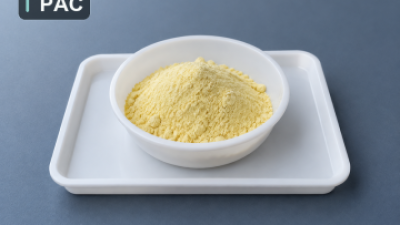
High-efficiency polyaluminium chloride (PAC) is designed to support faster, more reliable clarification in demanding water-treatment applications. Its pre-polymerized aluminum chemistry promotes rapid floc formation, helping suspended particles combine into larger, denser flocs that can be removed through sedimentation or filtration. This makes PAC a practical coagulant for variable raw-water conditions, including changes in turbidity, organic content, and operating temperature.
Selection should begin with the intended application and required grade. Water-treatment products may be specified for drinking-water or industrial use and are commonly supplied as a pale-yellow to yellow powder or an amber liquid. Powdered material can offer convenient storage and transport, while liquid grades may simplify dosing and handling in continuous treatment systems. The appropriate form depends on plant equipment, feed-water characteristics, and process-control preferences.
Quality verification is essential for consistent performance. Key control points include alumina content, basicity, water-insoluble matter, pH, iron, appearance, and coagulation test results. For drinking-water applications, grade-specific limits for arsenic and heavy metals should also be checked against applicable requirements. Jar testing or pilot evaluation can help determine the suitable dosage and confirm floc strength, settling behavior, and final water clarity before full-scale use.
Microorganisms consume biodegradable organic matter in wastewater. They need suitable oxygen, nutrients, temperature, and pH. The process reduces organic pollution naturally.
Well-designed systems may remove 85–95% of BOD. This range is only potential, not a promise. Toxic shocks and sudden production changes can reduce performance quickly.
Measure BOD, COD, TSS, pH, flow, and daily pollutant load. Compare biodegradable material with total oxidizable material. High COD and low BOD may need another treatment approach.
Wastewater can change between morning and evening. Cleaning events may create unusual discharges. Flow-weighted composite samples often show site conditions more clearly. One result can mislead.
Aeration may consume 45–75% of plant electricity. A blower running all night can quietly increase monthly costs. Review dissolved oxygen, airflow, blower runtime, and ammonia together.
Sensors, variable-speed blowers, and suitable diffusers may reduce unnecessary airflow. Check performance during both daytime and nighttime loads. Do not trust one sensor reading blindly. That mistake happens.
Yes, it can reduce organic loading before membrane filtration. Cleaner feedwater may limit fouling and reduce cleaning frequency. Stable biological control still matters. Membranes cannot fix every upstream problem.
Record flow, pH, temperature, aeration changes, and unusual discharges. Also note odors, foam, production changes, and cleaning events. Review trends weekly before making adjustments. Small corrections protect stability.
Sudden odor, foam, cloudy effluent, or changing sludge condition may signal trouble. Sudden flow increases can wash out active biomass. Unstable pH can slow microbial activity. Investigate the cause instead of masking symptoms.
Biological Water Treatment offers facilities a practical and adaptable way to reduce organic pollution, with the potential to remove approximately 85–95% of BOD when properly designed and operated. The process begins with a clear understanding of wastewater characteristics, including BOD, COD, TSS, pH, flow, and pollutant loading. Based on treatment goals, facilities can select aerobic, anaerobic, or anoxic biological processes to address carbon removal, nitrogen conversion, and other water quality requirements.
Effective performance depends on controlling key operating conditions such as sludge retention time, dissolved oxygen, temperature, nutrient balance, and alkalinity. Because aeration can account for roughly 45–75% of a treatment plant’s power use, optimizing oxygen delivery and biological activity can significantly reduce energy demand. Ongoing verification through BOD, TSS, nitrogen, phosphorus, and sludge measurements helps confirm compliance, identify operational issues, and maintain stable long-term treatment performance.