Leave Your Message
0%

Thinking about the top chemical raw material manufacturers in China? Honestly, it’s more than just a simple sales list. These raw materials are the backbone of so many industries—plastics, coatings, textiles, batteries, agriculture, construction, and pharma all rely on them. Their supply chains? Well, they often start from refinery streams, coal conversions, or some pretty specialized synthesis processes. And here’s the thing—if even a single port gets delayed, it can throw off resin deliveries hundreds of kilometers away. It’s kinda crazy how interconnected everything is.

According to the CEFIC Facts and Figures 2024 report, China is actually the world’s biggest hub for chemical production. Plus, ICIS’s 2024 Global Top 100 Chemical Companies report shows China really holds a strong position among the top players. But here’s a thing—they measure different stuff. Revenue alone? It doesn’t tell the full story about product quality. And being big? Doesn’t always mean super reliable technically. So, in this guide, I’ve looked at stuff like how much these companies can produce, how far they export, how diverse their product lines are, how much they invest in R&D, their certifications, and customer feedback. Some of the key names include Sinopec, PetroChina, Wanhua Chemical, Hengli Petrochemical, Zhejiang Longsheng, and China National Chemical Corporation.

As Patrick Thomas, the former CEO of Covestro, put it—"The chemical industry is the industry of industries." It’s a fitting way to think about it. Manufacturers need to keep delivering consistent specs, safe packaging, traceable batches, and stable lead times. When you’re choosing a supplier, it’s a good idea to check their product sheets, audit reports, and how they handle logistics regionally. No ranking out there is perfect, by the way. Public info can sometimes be incomplete, and company performance changes pretty quickly. So think of this as a helpful starting point—not the final word. And one more thing—avoid making unsupported claims about compliance, because responsible sourcing really depends on verified standards and detailed local reviews."
China Top 10 Chemical Raw Materials Manufacturers?

Defining Chemical Raw Materials and the Manufacturer Ranking Scope

Chemical raw materials are the industrial inputs used to make products, formulations, and further intermediates. They include basic inorganic substances, organic compounds, solvents, polymers, and selected performance additives. This scope excludes finished consumer goods, laboratory-only materials, and companies acting only as traders. A manufacturer should operate controlled production facilities and provide traceable batch documentation.

The ranking scope covers China-based producers serving domestic and international industrial markets. It considers verified production capacity, product consistency, quality systems, technical support, delivery reliability, and environmental management. Evidence may include factory audits, certification records, public filings, and customer feedback. A full evaluation should also examine storage conditions, sampling procedures, process safety, and the ability to maintain supply during market disruptions.

No ranking is perfectly neutral. Capacity can look impressive, yet high volume does not guarantee stable quality. Public information may also differ between production sites and company headquarters. Therefore, the top ten should be viewed as a structured comparison, not an absolute verdict. The methodology should disclose its scoring weights and review period. Smaller producers may deserve recognition when they offer stronger traceability or specialized process control. That point is easy to miss. An updated review should correct weak data, separate verified facts from estimates, and avoid rewarding claims that cannot be independently checked.

China Top 10 Chemical Raw Materials Manufacturers? — Defining Chemical Raw Materials and the Manufacturer Ranking Scope

This chart defines the ranking scope through the annual output of major chemical raw-material categories in China. It is a material-market benchmark rather than a ranking of individual manufacturers, so no company or brand data is included.

Estimated 2023 production, million metric tonnes; figures are rounded from publicly reported Chinese industrial statistics and sector data. The scope includes high-volume basic chemicals, fertilizer intermediates, polymers, and key petrochemical feedstocks.

Criteria for Evaluating China’s Leading Chemical Producers

China Top 10 Chemical Raw Materials Manufacturers?

Evaluating China’s leading chemical producers requires more than comparing annual output. A credible ranking should examine product consistency, technical capability, and documented quality controls. Buyers should request recent certificates, batch specifications, and traceability records. Plant capacity matters, but stable production matters more. A large facility cannot compensate for repeated variation in purity or particle size.

Supplier experience should be tested through samples, pilot orders, and technical discussions. Strong producers usually explain their testing methods clearly. They can identify impurities, storage risks, and realistic shelf life. Independent laboratory reports add useful evidence. So do on-site audits. During a visit, check sealed packaging, calibrated instruments, ventilation, and clearly marked storage areas. These details reveal daily discipline.

Compliance is another essential measure. Manufacturers should follow applicable environmental, worker-safety, transport, and chemical-handling requirements in their target markets. Responsible waste management and transparent documentation strengthen credibility. Financial stability also reduces supply interruptions during raw material shortages. No scorecard is perfect. A polished website can still hide weak quality systems. I would therefore combine public records, customer references, trial results, and direct factory communication. Delivery accuracy deserves attention too. Late shipments can disrupt an otherwise reliable production plan. A careful ranking should leave room for uncertainty, because supplier performance may change over time.

China Top 10 Chemical Raw Materials Manufacturers? – Criteria for Evaluating China’s Leading Chemical Producers
Rank Raw Material Indicative China Output Range
(2023, Rounded)
Primary Feedstocks Main Downstream Applications Key Supplier Evaluation Criteria Quality and Compliance Checkpoints Logistics and Supply Considerations
1 Sulfuric Acid Approximately 95–100 million metric tons Sulfur, sulfur-bearing gases, metal-smelting off-gas Phosphate fertilizers, metal processing, petroleum refining, chemicals and batteries Acid concentration consistency, plant operating rate, sulfur recovery integration, technical service and supply continuity Concentration, iron content, chloride level, heavy metals, corrosion-control procedures and emissions compliance Usually transported in dedicated acid tankers or rail cars; storage requires corrosion-resistant equipment and strict safety controls
2 Synthetic Ammonia Approximately 67–70 million metric tons Natural gas, coal, hydrogen and nitrogen from air Urea, ammonium salts, nitric acid, fertilizers, refrigerants and chemical intermediates Feedstock integration, energy efficiency, dependable production capacity, safety management and delivery reliability Ammonia purity, moisture, oil content, pressure controls, hazardous-material licensing and process-safety records Generally delivered by pipeline, road tanker, rail or pressurized storage; temperature and pressure management are essential
3 Methanol Approximately 85–90 million metric tons Coal, natural gas, coke-oven gas, biomass or captured carbon dioxide and hydrogen Formaldehyde, acetic acid, olefins, solvents, fuel blending and construction chemicals Carbon-intensity profile, feedstock stability, product purity, terminal capacity and ability to support contract volumes Methanol purity, water content, acidity, chloride content, trace metals and compliance with dangerous-goods handling requirements Bulk liquid transport by chemical tanker, rail or road; flammable-liquid storage and vapor-control systems are required
4 Caustic Soda Approximately 40–42 million metric tons Salt brine through the chlor-alkali process Alumina refining, pulp and paper, textiles, soaps, water treatment and chemical manufacturing Membrane-cell technology, concentration control, chlorine-management capability, plant utilization and geographic coverage Sodium hydroxide concentration, sodium chloride, iron, chlorate, mercury-free production and packaging integrity Supplied as liquid or solid; liquid caustic requires heated or insulated storage in compatible tanks and pipelines
5 Ethylene Approximately 31–33 million metric tons Naphtha, ethane, liquefied petroleum gas and other hydrocarbon feedstocks Polyethylene, ethylene oxide, ethylene glycol, vinyl chloride monomer and styrene-related products Cracker scale, feedstock flexibility, derivative integration, maintenance planning and long-term supply security Purity, methane and hydrogen levels, acetylene content, moisture, compressor reliability and pipeline specifications Mostly transferred through integrated petrochemical pipelines; cryogenic storage and specialized transport are used where necessary
6 Soda Ash Approximately 32–33 million metric tons Trona or natural soda resources, and synthetic salt-limestone-ammonia processes Flat glass, container glass, sodium silicates, detergents and chemical production Product density, particle-size control, resource access, energy efficiency, export capability and inventory resilience Sodium carbonate content, chloride, iron, insoluble matter, moisture, bulk density and particle-size distribution Dry bulk material commonly shipped by truck, rail or vessel; moisture protection and dust-control systems are important
7 Urea Approximately 65–70 million metric tons Synthetic ammonia and carbon dioxide Nitrogen fertilizer, diesel-exhaust fluid, resins, adhesives and animal-feed applications Ammonia integration, granule strength, biuret control, production reliability, storage capacity and seasonal delivery performance Nitrogen content, moisture, biuret, particle-size distribution, formaldehyde content and conformity with fertilizer standards Granular product is shipped in bags or bulk; protection from moisture, caking and contamination is required
8 Polyvinyl Chloride Resin Approximately 20–22 million metric tons Ethylene or calcium carbide, chlorine and hydrogen chloride Pipes, profiles, flooring, cable insulation, films, synthetic leather and medical products Polymerization technology, K-value consistency, residual monomer control, formulation support and reliable export packaging K-value, bulk density, volatile content, particle-size distribution, residual vinyl chloride and thermal stability Normally delivered as a dry powder in bags or bulk containers; dust control and moisture protection are necessary
9 Polyethylene Approximately 28–30 million metric tons Ethylene produced from naphtha, ethane, LPG or other hydrocarbon feedstocks Packaging film, containers, pipes, wire and cable insulation, rotational molding and consumer products Grade range, melt-flow consistency, comonomer control, reactor reliability, technical support and production flexibility Melt flow rate, density, tensile properties, additive package, ash, moisture and food-contact or application-specific approvals Pelletized product is shipped in bags, silos or containers; contamination prevention and stable warehouse conditions are required
10 Titanium Dioxide Approximately 4.3–4.5 million metric tons Titanium-bearing minerals, sulfuric acid or chlorine depending on process route Coatings, plastics, paper, inks, synthetic fibers and selected specialty applications Whiteness, tinting strength, particle-size control, surface treatment, process route and consistency between batches Titanium dioxide content, oil absorption, particle-size distribution, opacity, undertone, moisture and heavy-metal limits Fine powder is usually shipped in sealed bags or bulk containers; humidity control and dust-management procedures are required
Data note: Output figures are rounded indicative national production ranges based on publicly reported Chinese industry statistics and market estimates for 2023. They are category-level benchmarks rather than rankings of named companies. Final supplier selection should also verify current capacity, operating rate, product certificates, environmental permits, safety performance, payment terms and delivery records.

Profiles of China’s Top 10 Chemical Raw Materials Manufacturers

Profiles of China’s Top 10 Chemical Raw Materials Manufacturers

China remains the world’s largest chemical manufacturing base. Cefic’s Chemicals Trends Report 2024 estimates that China generated about 43% of global chemical sales in 2023. The China Petroleum and Chemical Industry Federation also reported industry revenue above 15 trillion yuan that year. These figures explain why capacity, logistics, and domestic demand matter in supplier evaluations.

The ten manufacturers profiled in this review represent major raw-material segments. Their portfolios include basic petrochemicals, synthetic resins, industrial gases, fertilizers, solvents, rubber chemicals, electronic chemicals, coatings intermediates, and specialty additives.

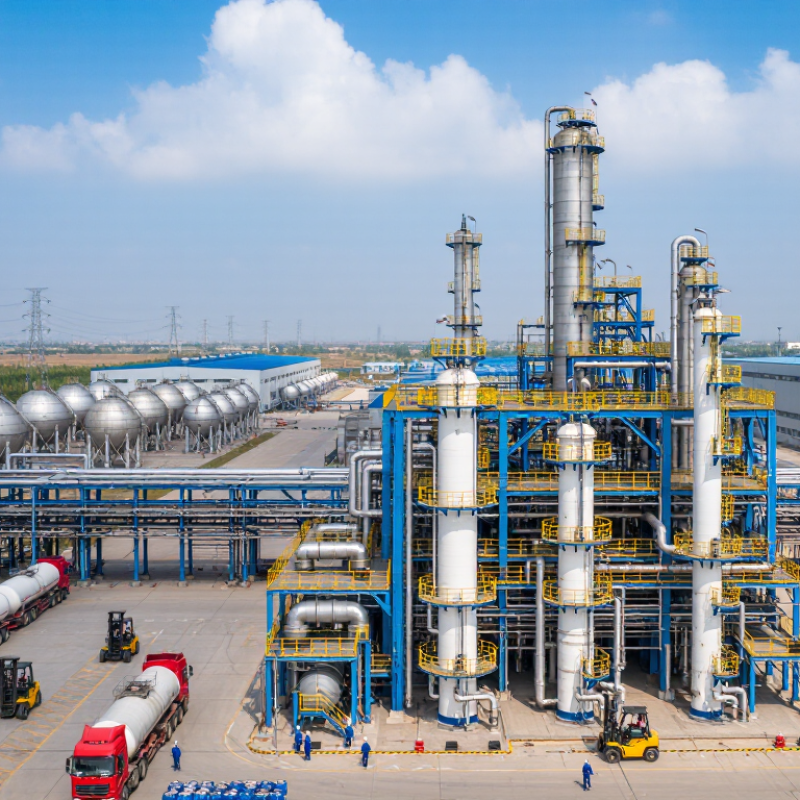
Several operate integrated production parks, where feedstock, utilities, testing laboratories, and warehouses sit within one site. That structure can reduce transport risks and improve batch consistency. ICIS market assessments show that feedstock prices and regional oversupply still influence Chinese contract pricing strongly.

Certifications provide useful evidence, but they are not enough. Buyers should examine production capacity, audit records, export experience, safety controls, and recent quality results. Public data can also be incomplete. Some manufacturers report designed capacity rather than effective output, which requires careful checking. Energy use is another concern, especially for energy-intensive materials. The International Energy Agency identifies chemicals as a major industrial energy consumer, making efficiency increasingly important. These profiles therefore compare scale with reliability, technical support, and transparent documentation—not scale alone.

Key Products and Applications Across the Top Ten Companies

China’s top ten chemical raw materials manufacturers serve construction, packaging, textiles, agriculture, electronics, and transportation. Their portfolios often include ethylene, propylene, methanol, caustic soda, sulfuric acid, and titanium dioxide. These materials support large production chains.

Ethylene becomes polyethylene for food films, pipes, and household containers. Propylene supports polypropylene fibers, medical packaging, and automotive components. Methanol is used in solvents, resins, and selected fuel processes. Caustic soda helps produce pulp, alumina, detergents, and water-treatment chemicals. Sulfuric acid remains essential for fertilizers, batteries, and metal processing.

Other leading producers focus on polyurethane intermediates, chlor-alkali products, synthetic rubber, and engineering plastics. Polyurethane components create mattress foam, insulation panels, refrigerator linings, and shoe soles. Synthetic rubber appears in tires, seals, conveyor belts, and vibration-control parts. Engineering plastics meet higher heat and strength demands in connectors and vehicle interiors.

Quality differences matter. A buyer should check purity, moisture, batch consistency, packaging, and traceability. Factory audits can reveal storage problems that certificates miss. Energy use also affects pricing and supply reliability. Rankings change with capacity, technology, and regional demand. Some comparisons feel too simple. Product availability may vary by season, port conditions, and environmental inspections. Clear technical data is still the safer starting point.

Production Capacity, Technology, and Quality Standards Comparison

China’s top ten chemical raw materials manufacturers should be compared by verified capacity, technology, and quality systems, not output alone. The China Petroleum and Chemical Industry Federation reported that China’s petroleum and chemical sector generated more than RMB 15 trillion in operating revenue in 2023. However, capacity figures often include planned or temporarily idle lines. Buyers should request audited production data, utilization rates, and delivery records.

Technology separates large producers from dependable suppliers. Continuous reactors, automated dosing, heat recovery, and digital batch tracking can reduce variation and energy consumption. The International Energy Agency identifies chemicals as a major source of future industrial energy demand, making efficiency increasingly important. A practical review should examine feedstock flexibility, process safety, wastewater control, and average equipment age. Bigger is not always better.

Quality comparison requires measurable evidence. ISO 9001 certification supports controlled procedures, while ISO/IEC 17025 accreditation strengthens laboratory reliability. Typical checks include assay, moisture, color, trace metals, particle size, and batch consistency. The 2024 European Chemical Industry Council facts report placed China at roughly two-fifths of global chemical sales, showing its scale, but scale does not guarantee uniform quality. Public disclosures remain uneven. An honest ranking should therefore separate confirmed capacity from estimates and test samples independently before long-term purchasing.

Regional Distribution and Industrial Strengths of China’s Manufacturers

China Top 10 Chemical Raw Materials Manufacturers: Regional Distribution and Industrial Strengths

China’s leading chemical raw materials manufacturers are not concentrated in one city. Their locations reflect ports, energy supply, skilled labor, and nearby customers. The Bohai Rim is strong in petrochemicals, solvents, polymers, and large-scale industrial chemicals. The Yangtze River Delta offers efficient logistics, advanced laboratories, and dense supplier networks. Southern coastal provinces focus more on specialty materials, electronic chemicals, coatings, and high-purity intermediates. Central and western regions benefit from coal, salt, phosphate, and other local resources. However, “top ten” rankings can change according to production capacity, export volume, quality systems, or innovation. A simple ranking may hide important differences.

Industrial strength is not only about factory size. Reliable manufacturers usually show stable batch records, traceable testing, clear safety procedures, and consistent delivery performance. In practical sourcing, buyers should review sample specifications, impurity limits, packaging details, and transport conditions. Site audits can reveal details that brochures often miss, such as storage discipline or laboratory calibration. Lower prices are attractive, but they may reflect different purity levels or service limits. That point deserves more attention.

Tips: Compare suppliers within the same region and product category. Request recent test reports, production capacity details, and export documentation. Check whether quality support continues after the first shipment. Do not rely on ranking lists alone.

How to Select a Suitable Chinese Chemical Raw Materials Supplier

Selecting a suitable Chinese chemical raw materials supplier requires more than comparing prices. China represented about 44% of global chemical sales in 2022, according to Cefic’s 2023 Facts and Figures report. This scale offers strong production capacity, but quality can vary between factories. Verify the supplier’s legal entity, production address, HS code, annual capacity, and export experience. Request a recent certificate of analysis, safety data sheet, specification sheet, and batch traceability record. Check whether testing follows recognized methods, not only internal procedures. A low price can still be the wrong price.

Tips: Ask for a pre-shipment sample and compare it with your approved standard. Review moisture, purity, color, particle size, and packaging condition. Confirm ISO 9001 or equivalent quality systems, while remembering that certification alone does not prove consistent batches. Use UN Comtrade data to compare trade flows by HS code, but do not treat shipment volume as proof of quality. Commercial terms also matter. Clarify minimum order quantity, lead time, Incoterms, payment protection, insurance, and claims handling. Keep written records of every technical promise.

A practical supplier audit should examine warehouse labels, retained samples, calibration records, and worker safety controls. Ask how rejected batches are isolated. Ask again. Industry reports from the International Council of Chemical Associations emphasize responsible operations and supply-chain transparency. However, remote audits have limits. I have seen polished documents hide weak packaging controls, so an independent inspection may be worthwhile before a long-term contract. Build a small trial order into the selection process, then measure delivery accuracy and batch consistency.

Industrial Silicon Raw Material for Metallurgical Applications: Benefits, Uses, and Selection Guide

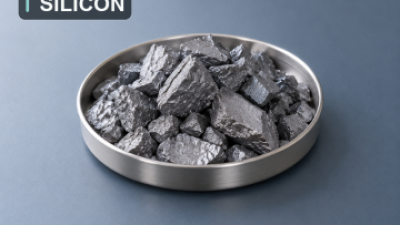
Industrial-grade silicon is a key raw material for metallurgical production, valued for its high silicon content, controlled reactivity, and compatibility with alloying processes. According to the *USGS Mineral Commodity Summaries 2024*, global production of silicon materials was approximately 3.6 million metric tons in 2023, reflecting continued demand from steelmaking, aluminum alloys, and chemical manufacturing. In steel production, silicon functions primarily as a deoxidizer and alloying element, while in aluminum casting it helps improve fluidity, strength, and wear resistance.

For metallurgical applications, selection should focus on silicon purity, particle size, chemical consistency, and the intended addition method. Powder forms are suitable for controlled dosing and rapid reaction, whereas compound or alloyed forms can support more efficient furnace handling and composition adjustment. Buyers should also review moisture control, trace-element limits, batch uniformity, and technical documentation. These factors influence recovery rates, melt quality, process stability, and final alloy performance.

High-quality industry-grade silicon can be supplied in powder and compound forms for diverse industrial requirements, with jumbo-bag packaging of 1,000 kg per bag to support efficient storage and transportation. Reliable supply programs may also include product selection assistance, specifications, compliance documents, logistics coordination, and export-oriented procurement support. Choosing a material that matches furnace conditions, target chemistry, and dosing equipment helps manufacturers maintain consistent metallurgical results while improving operational efficiency.

FAQS

What are chemical raw materials?

They are industrial inputs used to make products, formulations, and other intermediates. They include solvents, polymers, inorganic substances, organic compounds, and selected additives.

Which companies belong in a manufacturer ranking?

Eligible companies should operate controlled production facilities. They should provide traceable batch records and serve industrial customers. Trading-only companies should be excluded.

How should chemical manufacturers be evaluated?

Review production capacity, batch consistency, quality systems, technical support, and delivery reliability. Also examine storage, sampling, process safety, and environmental management. Certificates help, but audits reveal more.

Which products are commonly made by leading producers?

Common products include ethylene, propylene, methanol, caustic soda, sulfuric acid, and titanium dioxide. Other producers make synthetic rubber, polyurethane intermediates, chlor-alkali products, and engineering plastics.

Where are major production regions located?

The Bohai Rim supports petrochemicals, solvents, polymers, and large-scale industrial chemicals. The Yangtze River Delta offers strong logistics and laboratory networks. Southern coastal areas focus on specialty and high-purity materials.

What should buyers check before placing an order?

Check purity, moisture, impurity limits, packaging, and batch consistency. Request recent test reports and production details. Review transport conditions and export documents. Do not rely on price alone.

Are ranking lists completely objective?

No ranking is perfectly neutral. Large capacity does not always mean stable quality. Public information may differ between factories and headquarters. Not always.

Can smaller manufacturers be reliable choices?

Yes, smaller producers may offer stronger traceability or specialized process control. Their capacity may be limited, however. Check delivery records and backup plans carefully. That matters.

Why can supplier rankings change over time?

Rankings may shift with capacity, technology, regional demand, energy costs, and environmental inspections. Port conditions and seasonal availability can also affect supply. Some comparisons remain too simple.

Conclusion

This article presents a practical overview of China’s leading Chemical Raw Materials manufacturers, focusing on how the ranking scope is defined and how suppliers can be evaluated fairly. Key criteria include product quality, production capacity, technical expertise, research and development capabilities, environmental responsibility, certifications, delivery reliability, and customer service. It also explains the main product categories and their applications across industries such as manufacturing, construction, agriculture, textiles, electronics, and consumer goods.

In addition, the article compares manufacturers in terms of technology, quality standards, operational scale, and regional industrial advantages. It highlights how different areas of China specialize in distinct chemical production strengths, helping buyers understand potential sourcing options. The final section provides practical guidance for selecting a suitable supplier, including verifying specifications, testing samples, reviewing compliance documents, assessing supply stability, comparing total costs, and establishing clear communication and quality-control procedures.


Blog Tags:

    Alexander

    Alexander

    Alexander is a professional marketing specialist with extensive knowledge of chemical products and their industrial applications. As a dedicated member of the company, he focuses on communicating technical information clearly and helping customers identify reliable solutions for their production......
    Previous What Are the 2026 Top Feed Additives for Global Buyers?
    Next 2026 Top Caustic Soda Sodium Suppliers for Global Buyers?