Leave Your Message
0%

Choosing a chemical supplier isn’t just about finding the lowest price, you know? Little things like a delayed drum, inconsistent batches, or missing technical documents can really throw a wrench in your production line. As someone managing or buying chemicals, you need reliability—quality you can count on, clear specs, quick support when you need it, and logistics that match your market’s needs.

Frances Arnold, the Nobel laureate and chemical engineer, once said, “The thing about science is that it’s not about always being right. It’s about being wrong and figuring out why.” That same kind of curious, testing mindset really matters in chemical manufacturing, where process control and keeping product quality steady are what impact your decisions. When vetting suppliers, it pays to check their certifications, ask for the latest product data, and see how they handle questions about quality—little details like these are everything.

In this guide, I’ve looked at ten big names like BASF, Dow, SABIC, LyondellBasell, INEOS, Mitsubishi Chemical Group, LG Chem, Evonik, Eastman, and DuPont. They each have their own strengths—different ranges of products, regional coverage, and expertise. Just having a huge global footprint can help ensure steady supply, but it doesn’t automatically mean you’ll get the perfect product or service for your needs. No list is perfect, after all. Factors like availability, pricing, and technical support can vary depending on where you are and what you’re buying. So treat this as a starting point—then follow up directly with each company to make sure they tick all your boxes. Taking the time to review your options carefully actually saves you from costly surprises down the road.

10 Best Chemical Manufacturing Companies for Global Buyers

Chemical Manufacturing and Its Role in Global Supply Chains

Chemical manufacturing links raw materials to products used in construction, food production, healthcare, and electronics. Resins, solvents, fertilizers, and coatings often cross several borders before reaching a factory. A packaging producer, for example, may depend on imported feedstock, nearby processing capacity, and reliable port access. Each handoff adds cost and possible delay.

The scale is significant. UNCTAD’s Review of Maritime Transport 2024 reports that over 80% of international trade by volume moves by sea. Chemical supply chains therefore depend on ports, shipping schedules, storage, and careful handling—not just production capacity. Small delays matter.

The International Energy Agency’s The Future of Petrochemicals projected that petrochemicals would account for more than one-third of oil demand growth to 2030, and nearly half to 2050. Those are projections, not guarantees, but they show how deeply chemical inputs shape industrial demand.

Buyers can compare suppliers by checking delivery consistency, product specifications, backup capacity, and traceable quality controls. A low price alone says little about disruption risk. And a global ranking can miss regional strengths.

I would treat supplier resilience as a practical question: can the material arrive on time, meet the required specification, and remain available when a route or plant is disrupted?

How Global Buyers Can Evaluate Chemical Manufacturers

How Global Buyers Can Evaluate Chemical Manufacturers

Choosing among chemical manufacturers requires more than comparing prices and product lists. Start with the intended application, required specifications, and expected order volume. Ask for recent certificates of analysis and check whether test methods match your own quality requirements. A sample can reveal useful details, but one successful batch does not prove consistent production. Request information on batch records, traceability, and how deviations are investigated. Clear answers matter.

Evaluate the production site, not just the sales presentation. Where practical, arrange an audit or request a documented quality assessment. Look for maintained equipment, controlled storage conditions, and clear procedures for handling complaints and product changes. Confirm that the manufacturer can support your destination’s documentation and shipping needs. Ask about lead times, minimum quantities, packaging options, and contingency plans for delays. Small details count.

Price still matters, but compare total costs, including testing, freight, and rejected shipments. A polished website is not evidence of reliable performance. Even an established supplier can miss a detail, so record requirements in writing and review them before each order. No scorecard removes judgment. Choose a manufacturer that answers technical questions plainly, shares verifiable records, and treats quality concerns seriously.

Profiles of Ten Leading Chemical Manufacturing Companies

Profiles of ten leading chemical manufacturing companies can help global buyers compare capabilities beyond product catalogs. The strongest profiles explain what each manufacturer produces, which industries it serves, and how it manages quality. Buyers should look for clear information about production capacity, technical support, supply continuity, and documented quality systems. Specifics matter. A description of batch testing is more useful than a general promise of consistent quality.

Company profiles should also reveal how operations work in practice. Consider whether a manufacturer offers application guidance, maintains traceable records, and communicates realistic lead times. Details such as sample availability, packaging options, and change-control procedures can affect day-to-day purchasing. Some profiles may omit these points. That gap deserves follow-up, not guesswork. Compare suppliers using the same criteria, and distinguish verified facts from promotional claims.

Tips: Ask for current technical documents and a recent quality overview. Confirm how the supplier handles specification changes and delivery disruptions. Check whether the proposed product grade matches your process needs. A polished profile is only a starting point; direct, specific answers provide a better basis for a reliable supplier assessment.

Products and Industries Served by Leading Manufacturers

Leading chemical manufacturers supply a wide mix of materials, from industrial polymers and coatings to adhesives, solvents, and water-treatment products. Their portfolios often serve construction, automotive, electronics, agriculture, and packaging. A coating used on a metal panel, for example, may need to resist moisture, abrasion, and temperature changes. Product names alone reveal little. Buyers should compare technical data, recommended uses, packaging sizes, and batch specifications before requesting samples.

Manufacturers also differ in their application support and delivery capabilities. Some provide formulation guidance or help troubleshoot production issues; others focus on consistent bulk supply. Check whether a supplier can provide current safety data sheets, quality documents, and market-specific product information. Ask about lead times and storage requirements, too. Small details matter. A tidy catalog can still hide a poor fit for a particular process. Even a careful comparison may miss something, so a production trial can expose handling problems that paperwork does not show.

10 Best Chemical Manufacturing Companies for Global Buyers — Products and Industries Served by Leading Manufacturers

This comparison presents ten established chemical manufacturing segments rather than naming or ranking individual companies. Product and industry examples are representative of these segments; availability varies by producer and region.

Manufacturer Segment Representative Products Industries Served Typical Buyer Requirements Key Sourcing Considerations
Petrochemical and basic chemical producers Ethylene, propylene, benzene, methanol, and other commodity feedstocks Plastics, packaging, construction, automotive, textiles, and chemical processing Consistent specification, large-volume supply, and reliable delivery schedules Check feedstock availability, transport options, product specifications, and regional supply conditions.
Polymer and resin manufacturers Polyethylene, polypropylene, PVC, polystyrene, and engineering resins Packaging, building materials, automotive, electronics, consumer goods, and healthcare products Grade selection suited to processing method and end-use performance Confirm resin grade, melt-flow or other relevant properties, regulatory requirements, and technical support.
Industrial gas manufacturers Oxygen, nitrogen, argon, hydrogen, carbon dioxide, and specialty gas mixtures Healthcare, metals, food processing, electronics, energy, and laboratory operations Purity matched to use, dependable supply, and suitable storage or delivery format Assess local production or distribution, cylinder or bulk options, handling requirements, and safety documentation.
Agrochemical manufacturers Herbicides, insecticides, fungicides, seed-treatment products, and crop-protection intermediates Agriculture, horticulture, forestry, and crop-management services Products registered for the intended market and supported by compliant labeling Verify local registration, permitted uses, residue limits, stewardship guidance, and seasonal availability.
Specialty additive manufacturers Plasticizers, stabilizers, flame retardants, dispersants, and performance modifiers Plastics, coatings, construction materials, textiles, electronics, and automotive Compatibility with the formulation, defined performance targets, and application guidance Request technical data, evaluate regulatory status, and conduct application-specific trials before scale-up.
Paint, coating, and adhesive manufacturers Architectural and industrial coatings, primers, sealants, and bonding adhesives Construction, infrastructure, marine, automotive, packaging, and manufacturing Adhesion, durability, curing behavior, and suitability for the substrate and environment Compare application method, surface preparation needs, VOC rules, curing conditions, and service-life requirements.
Water-treatment chemical manufacturers Coagulants, flocculants, corrosion inhibitors, disinfectants, and antiscalants Municipal water, wastewater treatment, power generation, mining, and industrial facilities Performance suited to the water chemistry and treatment process Review dosing guidance, compatibility, safety information, and applicable drinking-water or discharge standards.
Cleaning and surfactant manufacturers Anionic, nonionic, and cationic surfactants; detergents; and cleaning intermediates Household and institutional cleaning, personal care, food processing, and industrial maintenance Cleaning performance, formulation compatibility, and appropriate safety and environmental profiles Check concentration, biodegradability information where relevant, transport classification, and local chemical requirements.
Pharmaceutical and fine-chemical manufacturers Active pharmaceutical ingredients, intermediates, and high-purity specialty chemicals Pharmaceuticals, biotechnology, diagnostics, and research laboratories Documented purity, batch consistency, traceability, and quality-system controls Assess audit requirements, change-control procedures, analytical documentation, and applicable manufacturing standards.
Battery and electronic-material manufacturers Battery-grade solvents, electrolyte salts, conductive materials, and high-purity process chemicals Energy storage, electric vehicles, electronics, semiconductor production, and advanced manufacturing Tight impurity limits, stable quality, and contamination-controlled handling Confirm analytical specifications, packaging integrity, supply-chain qualification, and transport requirements for the material.

Regional Reach, Production Capacity, and Supply Networks

For global buyers, a manufacturer’s regional reach matters as much as its stated production capacity. A nearby warehouse can shorten delivery times, while a well-placed export hub may serve several markets. Check whether the company produces locally or ships every order from one central site. Distance matters. Ask about typical lead times, available inventory, and how delays are communicated. These details reveal more than a broad claim of global coverage.

Capacity should be assessed against your actual order pattern, not only the facility’s maximum output. Request information on routine production volumes, maintenance schedules, and the process for handling demand peaks. A large plant may still have limited flexibility for smaller orders. Review how raw materials are sourced and whether alternative transport routes are available. A port delay or regional disruption can affect delivery even when production continues. That gap matters.

Tips: Ask for recent delivery-performance data, site locations, and written contingency procedures. Confirm packaging, storage, and shipment conditions match your needs. If an answer is vague, request a specific example; suppliers do not always have perfect records, and that is worth discussing.

Quality Standards, Regulatory Compliance, and Responsible Production

For global buyers comparing leading chemical manufacturers, quality is visible in routine controls, not polished claims. Ask for current certificates, product specifications, and batch-level certificates of analysis. Check whether test methods, acceptance limits, and revision dates are clearly stated. A tidy document pack helps, but it is not proof by itself. Request a sample record and trace one lot from incoming materials to finished packaging. Small details matter: a calibrated scale, sealed retain samples, and legible labels can prevent costly confusion.

Regulatory compliance should be verified for the destination market and product use. Buyers can ask how the supplier tracks rule changes, manages safety data sheets, and reviews transport classifications. Confirm that audits cover subcontractors and storage sites, not only the main plant. Responsible production deserves equally specific questions: water use, emissions monitoring, waste handling, worker training, and incident reporting. Look for dated metrics and corrective-action records rather than broad sustainability promises. No audit catches everything. That is worth remembering. A supplier can have strong systems and still miss a weak signal. Candid disclosure and timely correction matter more than a spotless presentation. Share forecasts early, agree on change notifications, and document who approves specification changes before shipment.

Key Considerations for Sourcing Chemicals Internationally

International chemical sourcing depends on more than price and nominal capacity. Buyers should compare specification limits, impurity profiles, batch consistency, and change-control procedures. Request recent certificates of analysis and safety data sheets, then check that product names, grades, and packaging details match across documents. A minor impurity can disrupt a sensitive process. Small details matter.

Logistics deserve equal scrutiny. UNCTAD’s Review of Maritime Transport 2024 reported that seaborne trade grew 2.4% in 2023, while forecasting 2% growth for 2024. That uneven recovery makes realistic lead times, backup routes, and clear responsibility for freight and insurance important. The IEA’s The Future of Petrochemicals notes that the chemical sector accounted for about 14% of global oil demand and 8% of natural gas demand in 2017, underscoring the value of asking suppliers for energy and emissions data. Verify certificates with their issuers, test incoming lots where risk warrants it, and agree on notification periods for process or source changes. A spreadsheet can still miss a weak point: who answers when a shipment arrives late, warm, or damaged? Get that answer in writing.

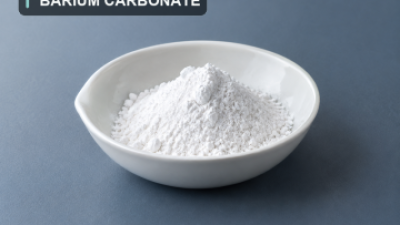
High-Purity Barium Carbonate: Industrial Applications, Quality Standards, and Manufacturing Benefits

High-purity barium carbonate supports controlled firing and formulation in ceramic bodies and glazes, specialty glass, ferrite materials, and other industrial processes that require a dependable barium source. Its performance depends on consistent composition and physical properties: variations in moisture, particle size, or impurities can affect batching, reaction behavior, and final-product uniformity. The USGS *Mineral Commodity Summaries 2024* estimated global barite mine production at 9.7 million metric tons in 2023. Barite is an important upstream barium mineral, although its production volume should not be confused with the supply of barium carbonate itself.

For industrial conversion, dense white industry-grade powder offers a practical format for handling and formulation. Quality assessment should confirm product identity and barium carbonate assay, alongside moisture, acid-insoluble matter, sulfur species, iron, and particle-size distribution. These checks help manufacturers assess suitability for process requirements, maintain batch-to-batch consistency, and manage firing behavior without assuming that a single grade fits every application. Clear control limits, supported by representative testing and supplier documentation, make material selection more reliable for production teams.

FAQS

What should buyers compare when reviewing chemical products?

Compare technical data, intended uses, package sizes, and batch specifications. A coating for a metal panel may need to withstand moisture, abrasion, and temperature changes.

Why request samples and production trials?

Samples help assess product fit, while production trials can reveal handling problems that documents may miss. A small trial may still fail to reflect every production condition.

How can buyers assess a manufacturer’s delivery capabilities?

Ask about site locations, routine lead times, inventory, and delay notifications. A nearby warehouse may shorten delivery, but it does not guarantee stock.

Does stated production capacity show whether a supplier can meet my orders?

Not by itself. Compare routine output and maintenance schedules with your order pattern, including smaller orders and demand peaks.

What supply risks should buyers discuss?

Ask how raw materials are sourced and whether alternative transport routes exist. Port delays can disrupt shipments even when production continues.

Which quality records are useful to request?

Request current certificates, product specifications, and batch-level certificates of analysis. Check test methods, acceptance limits, and revision dates.

How can buyers check whether a batch is traceable?

Ask for a sample record and trace one lot from incoming materials to finished packaging. Look for legible labels and sealed retain samples.

What should buyers verify about compliance?

Confirm requirements for the destination market and product use. Ask how safety data sheets and transport classifications are reviewed, including for storage sites and subcontractors.

What evidence can support claims about responsible production?

Request dated metrics for water use, emissions, waste handling, and worker training. Corrective-action records can reveal gaps that broad promises leave out.

How should buyers manage specification changes?

Agree in writing who approves changes and how notifications are shared before shipment. Share forecasts early, though plans can still change.

Conclusion

Chemical Manufacturing plays a vital role in global supply chains by providing essential materials for industries such as agriculture, construction, healthcare, electronics, and consumer goods. Choosing a manufacturer requires more than comparing prices: global buyers should assess product consistency, technical capabilities, production capacity, delivery reliability, and the ability to support changing demand. Leading manufacturers may offer a broad range of products and serve customers across multiple sectors, while their regional facilities and distribution networks can influence lead times and supply continuity.

International sourcing also calls for careful attention to quality systems, regulatory requirements, documentation, and responsible production practices. Buyers should confirm that products meet the relevant specifications for their intended use and that suppliers can communicate clearly about handling, transportation, and delivery terms. By weighing these factors alongside cost and service, organizations can build dependable supplier relationships, manage sourcing risks, and make informed decisions for their long-term needs.


Blog Tags:

    Charlotte

    Charlotte

    Charlotte is a professional marketing specialist at RIVER AND MOUNTAIN GLOBAL LIMITED, focusing on the international promotion of chemical products and industrial raw materials. With extensive knowledge of product applications, technical specifications, quality requirements, and market trends, she......
    Previous 2026 Top Caustic Soda Sodium Suppliers for Global Buyers?