
So, what's on the radar for feed additives in 2026, especially for global buyers? Well, the feed additives market is really gearing up for bigger demands, with a clear focus on measurable results. Back in 2023, Grand View Research pegged the market at around $40 billion, and they’re not stopping there — they see steady growth all the way through 2030. Meanwhile, MarketsandMarkets is saying it’ll grow from roughly $38.8 billion in 2024 to about $50 billion by 2029. Those figures don’t match exactly, and honestly, that’s worth paying some attention to.
If you’re a global buyer, you’ll probably be looking at the usual big players like probiotics, enzymes, phytogenics, organic acids, and mycotoxin binders. Each of these addresses a real farm issue — probiotics help keep gut health in check, enzymes make nutrients from corn, wheat, and soybean meal more available, and phytogenics might help animals keep eating during hot weather. Organic acids are all about feed hygiene, and mycotoxin binders are there to deal with possible contamination in stored grains.
Dr. Richard Ducatelle, who's pretty well-known for his work on poultry gut health, once said, “Feed additives are tools, not replacements for good management.” That’s a great point to keep in mind when you’re making your 2026 purchasing decisions. No matter how fancy an additive is, it’s not going to fix issues like poor ventilation, wet litter, bad storage, or irregular feeding. Buyers should dig into controlled trial data, check how much to use, see if it’s stable over time, and trace the batch history. And don’t forget to make sure everything lines up with your local feed regulations.
The FAO and OECD-FAO Agricultural Outlook for 2024–2033 are highlighting continued pressure to produce animal protein efficiently. That kind of push will surely influence what people buy. But, with all the buzz and excitement, it’s easy to get carried away with hype. Not every botanical blend or lab result will play out in real farm conditions. The most trustworthy suppliers will be upfront about what their products can and can’t do, backing it up with real-world data on feed conversion, mortality rates, litter quality, and profit margins per animal.
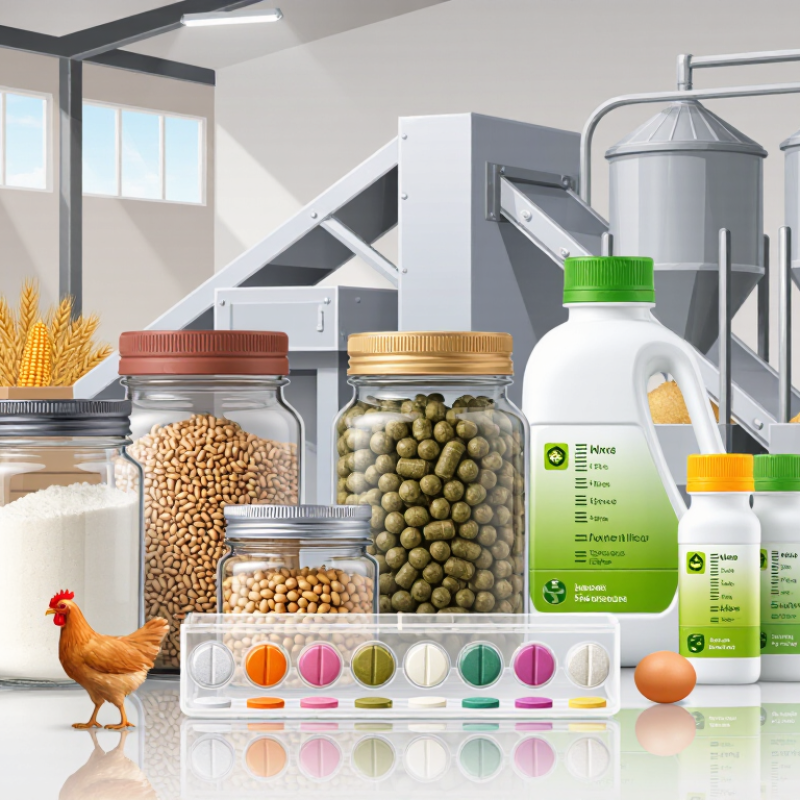
Feed additives are targeted tools, not ordinary feed ingredients. Under European Regulation 1831/2003, they can improve feed hygiene, animal performance, digestion, or product quality. Common categories include enzymes, probiotics, organic acids, minerals, vitamins, and phytogenic compounds. Their value becomes clearer in 2026, as buyers face higher feed costs, stricter sustainability demands, and pressure to reduce routine antimicrobial use.
The OECD-FAO Agricultural Outlook 2024-2033 projects global meat production to grow by about 12% by 2033. More animals will need efficient nutrition. Enzymes can help release nutrients from grains. Organic acids may support feed hygiene. Probiotics can help stabilize gut conditions, although results vary by species, diet, and farm management.
No additive is a magic switch. Field performance can disappoint when storage, dosage, or water quality is ignored. That is where practical experience matters.
Tips: Ask suppliers for independent trial data, active-content specifications, stability results, and clear dosage instructions. Compare results against feed conversion, mortality, egg mass, or daily gain. The FAO’s 2023 report on antimicrobial resistance also supports a cautious shift toward prevention and better husbandry. Buyers should check whether a product works under local temperature, grain quality, and disease pressure. Cheap inclusion rates can become expensive mistakes. Evaluate the whole feeding system, not one impressive laboratory result.
For global buyers, the leading feed additives are classified by purpose, evidence, and supply reliability. A 2026 shortlist often includes enzymes, probiotics, organic acids, minerals, amino acids, and mycotoxin-management products. Each category solves a different production problem. Enzymes may improve nutrient release in grain-based diets. Probiotics support digestive balance, but results can vary between farms. Organic acids help manage feed hygiene when storage conditions are difficult. I have seen buyers reject attractive products because the technical file was incomplete.
Classification should also include proof and practicality. Experienced purchasing teams check trial design, dosage accuracy, shelf life, mixing uniformity, and measurable animal responses. They compare feed conversion, weight gain, mortality records, and total cost per kilogram produced. Regulatory status matters equally. A product approved in one market may require different documentation elsewhere. Packaging must survive humid warehouses and long sea routes. Small details matter. Some buyers still overvalue a high laboratory concentration, while ignoring application losses during feed production.
Tips: Ask for independent test data, not only supplier summaries. Request batch specifications and storage instructions. Test a small shipment before scaling orders. Keep farm records for at least one complete production cycle. Results may disappoint, especially when water quality, genetics, or feed formulation changes. That uncertainty deserves honest discussion. The best additive is not always the most concentrated option; it is the one that performs consistently, fits local rules, and remains economical in daily use.
| Buyer Priority | Additive Class | Common Active Substances | Primary Production Function | Typical Buyer KPI | Main Livestock Applications | Procurement and Quality Criteria | Global Regulatory Consideration |
|---|---|---|---|---|---|---|---|
| 1 | Enzymes | Phytase | Releases phosphorus from phytate and can reduce the need for inorganic phosphate supplementation. It may also improve the availability of calcium and other nutrients. | Available phosphorus, feed cost per kilogram of gain, bone mineralization, and phosphorus excretion. | Poultry, swine, aquaculture, and other monogastric animals. | Declared enzyme activity, thermostability, recovery after pelleting, substrate specificity, and compatibility with the complete premix. | Approved use, permitted species, enzyme units, labeling, and environmental claims differ by jurisdiction. |
| 2 | Amino Acids | L-Lysine, DL-Methionine, L-Threonine, L-Tryptophan, and Valine | Balances dietary amino acids, supports lean tissue and egg or milk production, and enables lower-protein formulations when properly formulated. | Feed conversion ratio, nitrogen utilization, growth rate, carcass or egg performance, and diet cost. | Broilers, layers, pigs, dairy cattle, and aquaculture species. | Assay value, purity, bioavailability, particle size, flowability, storage stability, and reliable supply continuity. | Generally treated as nutritional feed additives or feed materials depending on local legislation and product presentation. |
| 3 | Carbohydrase Enzymes | Xylanase, beta-glucanase, cellulase, and mannanase | Degrades selected non-starch polysaccharides, improves digesta viscosity or nutrient release, and can reduce variability in plant-based diets. | Feed conversion, apparent metabolizable energy, litter quality, viscosity, and consistency of animal performance. | Poultry and swine, particularly diets containing wheat, barley, rye, or other viscous feed ingredients. | Activity under target gut conditions, thermal stability, matrix-value validation, and compatibility with phytase and protease. | Claims must remain within the authorized function and species scope in the destination market. |
| 4 | Organic Acids | Formic acid, propionic acid, lactic acid, fumaric acid, and blends of organic acids | Supports feed hygiene and preservation; some formulations are used to help manage gastrointestinal conditions and reduce the growth of undesirable microorganisms in feed. | Feed mold count, Salmonella or Enterobacteriaceae monitoring, moisture stability, shelf life, and animal performance. | Poultry, swine, aquaculture, and feed-mill applications. | Acid concentration, buffering capacity, corrosion profile, odor, carrier technology, worker safety, and uniform distribution. | Preservative, hygiene, or zootechnical claims may be regulated differently; safety documentation and handling classification are essential. |
| 5 | Probiotics | Defined strains of Bacillus, Lactobacillus, Enterococcus, or yeast-based microorganisms | Helps support intestinal microbial balance and may improve gut function, feed efficiency, or resilience under production stress. | Survival through processing, viable count at end of shelf life, mortality, fecal consistency, feed conversion, and uniformity. | Poultry, swine, calves, dairy cattle, and aquaculture. | Strain identity, viable count, genomic safety profile, contamination control, heat tolerance, shelf-life stability, and independent trial evidence. | Strain authorization, qualified-presumption-of-safety or equivalent requirements, and permitted claims vary substantially between regions. |
| 6 | Mycotoxin Risk-Management Products | Mineral adsorbents, yeast cell-wall fractions, enzymatic detoxification agents, and multi-component products | Helps reduce the impact of selected mycotoxins in contaminated feed; performance is toxin-specific and should not be generalized across all mycotoxins. | Mycotoxin concentration, animal intake, liver indicators, growth performance, egg or milk output, and mortality. | Poultry, swine, dairy cattle, beef cattle, and aquaculture. | Validated binding or detoxification data, target-toxin coverage, low nutrient adsorption, batch consistency, and independent laboratory testing. | Products may be regulated as technological additives, substances for reduction of contamination, or feed materials depending on local rules and claims. |
| 7 | Antioxidants and Preservatives | Tocopherols, rosemary extracts, citric acid, and permitted synthetic antioxidants | Protects fats, vitamins, pigments, and finished feed from oxidation and helps maintain nutritional value during storage. | Peroxide value, anisidine value, rancid odor, vitamin retention, pigment stability, and storage losses. | All feed sectors, especially high-fat poultry, aquaculture, pet-food, and premix formulations. | Antioxidant activity, dosage accuracy, compatibility with fats and minerals, shelf life, packaging, and food-chain residue requirements. | Permitted substances, maximum levels, labeling, and restrictions for feed and food-producing animals differ by market. |
| 8 | Trace Minerals | Zinc, copper, iron, manganese, selenium, and iodine in inorganic or organic forms | Supports enzyme systems, immune function, skeletal development, antioxidant defense, reproduction, and product quality. | Mineral status, hoof or leg health, immune indicators, growth, reproductive performance, and mineral excretion. | All species, with source selection depending on species, diet, production stage, and environmental objectives. | Elemental concentration, relative bioavailability, heavy-metal limits, particle size, hygroscopicity, and interaction with other premix components. | Maximum total dietary levels and environmental limits are especially important for copper, zinc, selenium, and iodine. |
| 9 | Emulsifiers | Lecithin, lysophospholipids, and other authorized emulsifying substances | Improves the dispersion and utilization of dietary fats and may support energy use when dietary fat quality or digestibility is limiting. | Apparent fat digestibility, energy-corrected feed conversion, growth rate, litter quality, and carcass yield. | Broilers, piglets, calves, and aquaculture species. | Hydrophilic-lipophilic balance, stability during pelleting, compatibility with oils, effective dose, and demonstrated matrix value. | Function, purity specifications, permitted sources, and claims should be checked for each destination market. |
| 10 | Yeast and Fermentation Products | Inactivated yeast, yeast cell-wall fractions, beta-glucans, and mannan-oligosaccharides | Provides functional fermentation components that may support gut integrity, immune response, palatability, or feed consistency. | Feed intake, fecal quality, mortality, immune indicators, gut morphology, and performance during stress periods. | Poultry, swine, calves, dairy cattle, and aquaculture. | Origin and processing method, beta-glucan or mannan content, microbial safety, batch consistency, digestibility, and evidence for the target species. | Product classification and permitted claims vary according to whether the material is live, inactivated, extracted, or used as a technological additive. |
| 11 | Coccidiostats and Antiprotozoal Additives | Authorized ionophore or non-ionophore active substances | Controls coccidiosis risk in susceptible production systems when used according to veterinary and feed regulations. | Oocyst counts, lesion scores, mortality, growth performance, feed conversion, and residue compliance. | Primarily poultry, with use depending on local authorization and production system. | Active-substance identity, concentration, mixer accuracy, withdrawal period, cross-contamination controls, and resistance-management program. | Strictly regulated; authorization, maximum levels, withdrawal periods, target species, and export-market requirements must be verified before purchase. |
| 12 | Phytogenic Feed Additives | Standardized botanical extracts, essential oils, saponins, and polyphenols | Used to support feed intake, digestive function, antioxidant status, or microbial management through defined plant-derived compounds. | Feed intake, average daily gain, feed conversion, gut health indicators, odor emissions, and product uniformity. | Poultry, swine, ruminants, and aquaculture. | Botanical authentication, marker-compound concentration, chemical fingerprint, residue profile, palatability, and stability. | Regulatory classification and allowable claims differ widely; standardized composition is essential for international trade. |
Global buyers increasingly need additives that support animal health and performance. The OECD-FAO Agricultural Outlook 2024-2033 projects global meat consumption to rise by about 12% by 2033. This growth increases pressure on feed efficiency, gut stability, and responsible resource use.
Phytase remains a practical choice. It helps animals release phosphorus from plant-based ingredients. This can improve mineral utilization and reduce phosphorus losses. Carbohydrases may support energy availability, especially in cereal-based diets.
Probiotics, postbiotics, and organic acids also receive attention for gut comfort and microbial balance. Evidence is promising, but results can vary by species, dosage, and farm conditions. That limitation matters.
Antioxidants and selected trace minerals may support stress management, immunity, and tissue function. Mycotoxin-control additives can provide another safety layer when grain quality is inconsistent. However, they cannot replace testing, storage control, or clean water.
The European Food Safety Authority requires evidence for additive safety and intended efficacy, making documented trials increasingly important. Buyers should examine digestibility results, stability during pelleting, and performance under local conditions. A product that performs well in one ration may disappoint elsewhere.
That is an uncomfortable reality. Practical validation still matters more than impressive claims.
For global feed buyers in 2026, the most useful additives are those that improve feed efficiency without hiding weak management. Enzymes can release nutrients from cereal-based diets, while organic acids support feed hygiene and digestion. Mineral forms with better absorption may reduce waste, but their value depends on the animal, ration, and water quality. Field results are rarely identical.
In broiler houses, enzymes may improve weight gain and feed conversion when diets contain wheat or barley. In pig production, selected probiotics or prebiotic fibers can support gut stability during weaning, when intake often falls sharply. My practical rule is simple: measure feed intake, average daily gain, mortality, litter condition, and medication changes before judging performance. One clean trial beats a confident sales claim.
Buyers should request lab specifications, stability data, inclusion rates, and evidence from comparable climates. Heat, humidity, storage time, and pelleting temperature can reduce additive activity. Trace minerals, yeast products, buffers, and mycotoxin-control materials may also help, but they are not universal solutions. Verify local approvals and label requirements before purchase. Start with one production problem. Keep a control group. Review the numbers after several cycles, not after one impressive week. Sometimes the additive works; sometimes management was the real bottleneck. That uncomfortable finding can save money and improve future formulations.
Global buyers are examining enzymes, probiotics, organic acids, minerals, and mycotoxin-control additives in 2026. Yet product function is only one purchasing factor. Safety evidence matters more.
Ask for a current certificate of analysis for every batch. It should show active content, moisture, microbial limits, heavy metals, and unwanted residues. Review the manufacturing site’s HACCP and feed-safety procedures. A credible supplier should provide full traceability, from raw material receipt to sealed shipment. Batch numbers should match the technical documents. Small mismatches can become expensive problems.
Tips: Check the destination country’s approved additive list before ordering. Confirm permitted species, dosage, labeling language, and usage limits. Request stability data for heat, humidity, and storage time. Test a retained sample independently when the purchase is large. Do not rely on a polished brochure. It is not evidence. Also examine allergen controls and cross-contamination risks, especially in shared production areas. Standards such as GMP-based feed systems, ISO 22000, or equivalent schemes can support confidence, but certification alone cannot replace product testing. Buyers should also clarify who handles recalls, complaints, and regulatory changes. In practice, these clauses are often overlooked. I have seen specifications that looked complete but lacked a clear shelf-life method. That weakness deserves a second review. Overly broad performance claims should invite questions, not quick approval.
Typical commercial inclusion reference points and the main safety, quality, and regulatory checks buyers should complete.
In 2026, global buyers are comparing feed additives beyond product labels. Enzymes, probiotics, organic acids, and mycotoxin binders remain widely evaluated options. The strongest choice depends on animal species, feed formula, climate, and production goals. A low quoted price can become expensive after freight, testing, storage, and import clearance.
Experienced buyers request recent certificates of analysis, batch numbers, stability data, and clear dosage instructions. They also compare active concentration, not only price per kilogram. For example, a probiotic with higher viable counts may reduce the cost per finished ton of feed. Supplier reliability needs practical proof. Check production capacity, response times, backup inventory, export documents, and average lead times. A supplier promising seven-day delivery may struggle during port delays. I have found that honest answers about limitations often matter more than polished sales language.
Tips: Compare landed cost, not invoice price. Ask for samples from different batches. Review test methods carefully. Confirm packaging against humid storage conditions. Request a written plan for delayed shipments or quality disputes. Keep at least one qualified alternative supplier. This feels inefficient, but supply interruptions are usually more expensive. Buyers should also run a small controlled trial before changing a full feed program. Results can vary between farms, even with identical dosage rates. Cost models should include rejected batches, technical support, and local laboratory verification. Sometimes, the cheapest additive is simply the least tested option.
Feed additives are targeted substances used to improve hygiene, digestion, animal performance, or product quality. They are not ordinary feed ingredients. Common types include enzymes, probiotics, organic acids, minerals, vitamins, and phytogenic compounds.
Feed costs are rising, while sustainability expectations are becoming stricter. Additives may help animals use nutrients more efficiently and reduce production waste. They can also support prevention and better husbandry. Results are not guaranteed.
Buyers often review enzymes, probiotics, organic acids, minerals, amino acids, and mycotoxin-management products. Each category addresses a different production concern. Enzymes may release more nutrients from grain-based diets.
Probiotics may help stabilize gut conditions and support digestive balance. Their results vary by species, diet, genetics, and farm management. A product that works well on one farm may disappoint elsewhere. That is worth remembering.
Ask for independent trial data, active-content specifications, stability results, and dosage instructions. Compare results using feed conversion, mortality, egg mass, weight gain, or daily gain. A small field test can reveal more than one impressive laboratory result.
Humid warehouses, long sea routes, heat, and poor mixing can reduce product performance. Buyers should check shelf life, packaging strength, and mixing uniformity. Water quality can also affect results.
No. A low dosage may look attractive but perform poorly under local conditions. Extra losses can appear through weaker growth, poorer feed conversion, or inconsistent results. Cheap can become expensive.
Buyers should confirm the product’s legal status and required documents in the destination market. Approval in one market may not satisfy another market’s requirements. A complete technical file supports safer purchasing decisions.
Focusing on concentration alone is a common mistake. Real performance depends on dosage, feed quality, temperature, water, genetics, and disease pressure. I might still overvalue a strong laboratory number. Farm records should decide.
In 2026, Feed Additives remain essential tools for improving animal health, feed efficiency, and production performance. Global buyers commonly classify them by function, including nutritional additives, gut-support solutions, enzymes, acidifiers, antioxidants, mineral sources, and additives that help maintain feed quality. The right selection depends on species, production goals, ingredient composition, climate, and farm management conditions. When properly formulated and used, these products can support digestion, nutrient utilization, stable feed quality, animal growth, and more consistent production results.
Before purchasing, buyers should carefully evaluate safety, quality, traceability, testing procedures, labeling accuracy, and compliance with applicable regional regulations. Supplier comparisons should also consider product consistency, technical support, minimum order quantities, total cost, delivery capacity, storage requirements, and supply reliability. A dependable sourcing strategy balances proven functionality with transparent documentation and long-term availability, helping producers manage operational risks while meeting changing market expectations.