Barium Chloride Raw Material for Industrial Detergent Formulations
Product Description
Barium Chloride is a water-soluble inorganic salt supplied for controlled industrial applications that require a defined barium source. In selected industrial cleaning or detergent-manufacturing processes, its reaction with soluble sulfate can form insoluble barium sulfate. This property may be useful as a process step when precipitation, separation, residual-ion control, and waste treatment have been designed by qualified technical personnel.
The material is not presented as a routine ingredient for household detergent, personal-care products, food-contact cleaning, or unrestricted consumer use. Soluble barium compounds are toxic, and suitability depends on the formula, final residual level, exposure route, discharge conditions, and regulations in the destination market. Buyers should identify whether anhydrous barium chloride or barium chloride dihydrate is required, because the hydration state affects molecular weight, assay basis, dosing calculations, and storage behavior.
Product Attributes
|
Attribute |
Selection Reference |
| Product | Barium Chloride |
| Product category | Controlled industrial detergent and chemical-processing raw material |
| Chemical identity | BaCl₂ (anhydrous) or BaCl₂·2H₂O (dihydrate), as ordered |
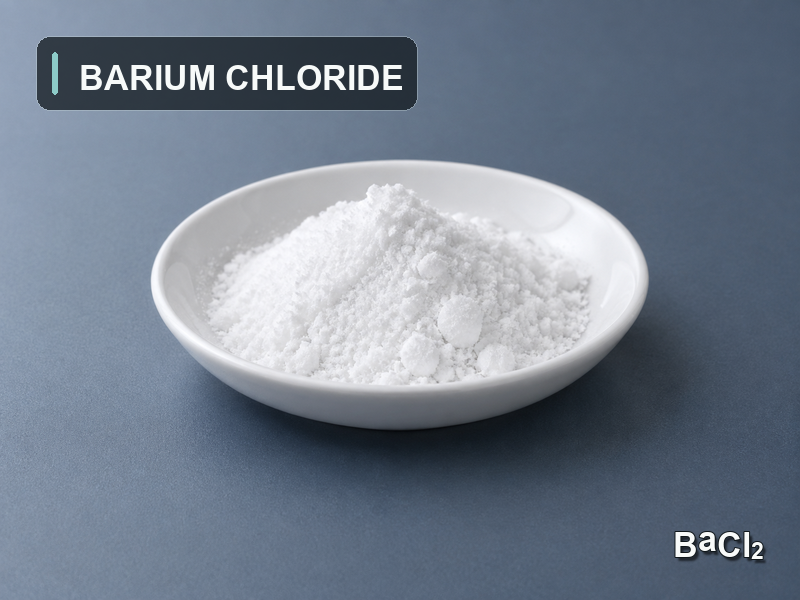
| Typical appearance | White crystals, granules, or crystalline powder |
| Main specification points | Assay; hydration state; sulfate; iron; water-insoluble matter; moisture or crystal water; particle profile |
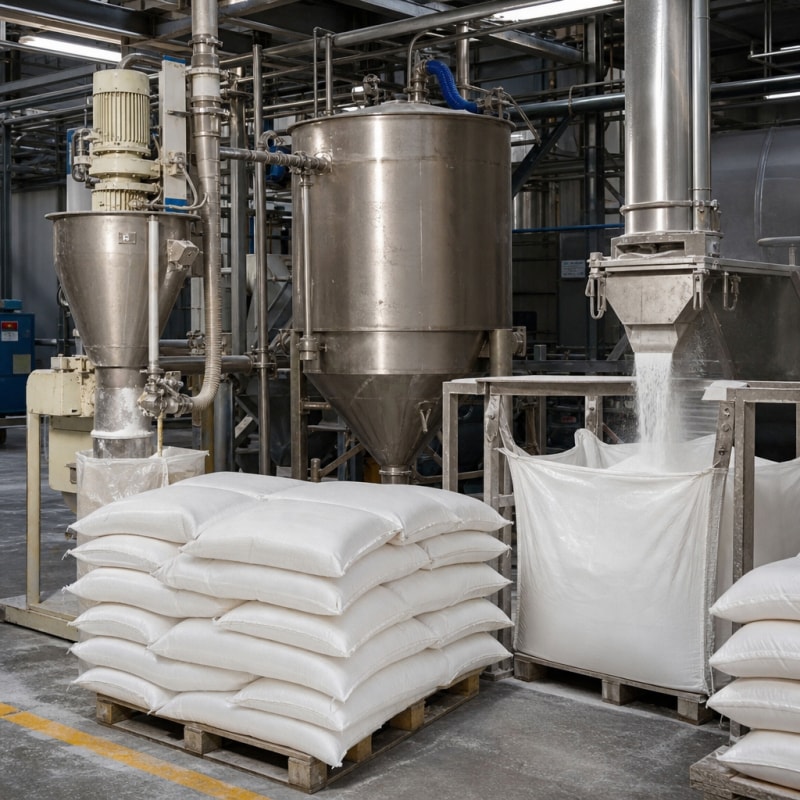
| Packing options | 25 kg lined bags or drums, or buyer-agreed moisture-protective export packing |
Material Profile and Production
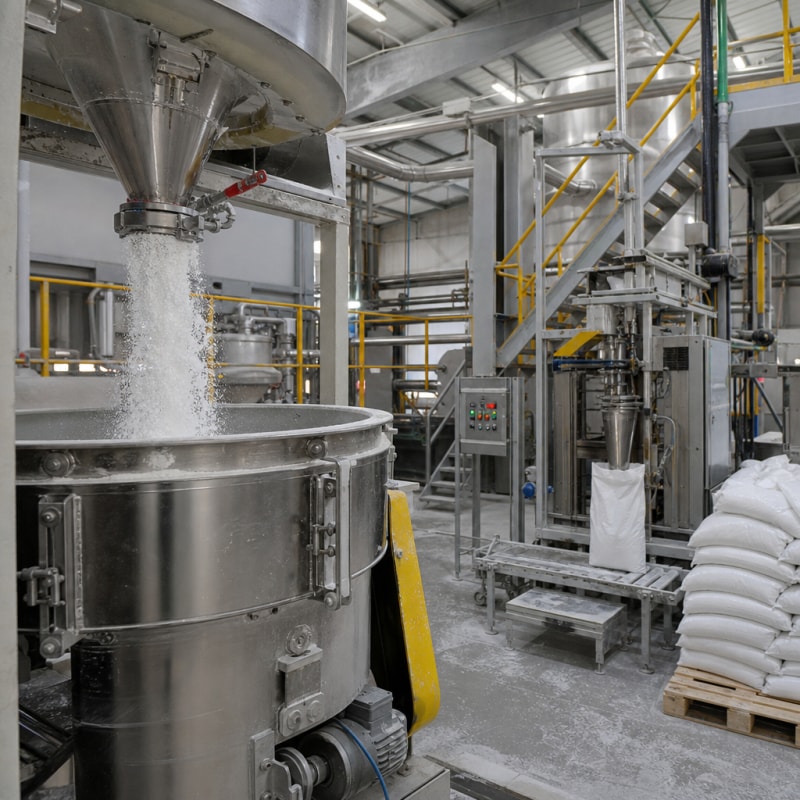
Commercial Barium Chloride can be produced by reacting a suitable barium source with hydrochloric acid, followed by solution purification, concentration, crystallization, solid-liquid separation, drying or controlled dehydration, screening, and packing. The exact route depends on the selected raw materials and whether the finished product is required as the dihydrate or anhydrous salt.
Control of purification and crystallization influences insoluble matter, sulfate, iron, appearance, and crystal form. During finishing, the product is protected from contamination and excess moisture, then assigned a traceable lot code. Because anhydrous and hydrated forms are not interchangeable on a weight-for-weight basis, production identity and package labeling should be verified before release and again during the buyer's receiving inspection.
Industrial Cleaning Applications and Process Value
In a technically designed industrial process, Barium Chloride may be evaluated for removal or measurement of sulfate through formation of barium sulfate. Potential use points include intermediate process treatment, preparation of certain specialty cleaning chemicals, or treatment of a controlled process stream before downstream separation. The precipitated solids must be removed effectively, and neither unreacted soluble barium nor generated waste should be allowed to pass into a finished product or discharge stream without verification.
A qualification trial should establish stoichiometric demand, solution concentration, addition rate, mixing time, temperature, settling or filtration behavior, residual barium, residual sulfate, and the effect of other formulation ingredients. Carbonates, phosphates, surfactants, chelating agents, water hardness, and pH can change precipitation or separation performance. The user should validate the complete process rather than infer suitability from laboratory clarity alone.
Quality Assurance and Buyer Qualification
Release testing can cover chemical identity, barium chloride assay, hydration state, moisture or crystal water, sulfate, iron, water-insoluble matter, appearance, and particle profile. Results are assessed against the approved specification and linked to the finished-lot number. Since assay calculations differ between anhydrous and dihydrate material, the reporting basis and test method must be unambiguous.
Buyers should provide their decisive impurity limits and intended analytical methods during inquiry. A shipment certificate of analysis and current safety data sheet may be supplied as applicable. Customer-specific residual-barium testing, third-party inspection, retained samples, or destination compliance statements are available only when agreed before production and supported by appropriate evidence.
Safe Handling, Storage, and Regulatory Review
Barium Chloride is toxic if swallowed and can be harmful through other exposure routes. Prevent dust generation and ingestion; use closed transfer, local exhaust, suitable gloves, eye protection, protective clothing, and respiratory protection where the site assessment requires it. Eating, drinking, and smoking must be prohibited in handling areas. Emergency response, first aid, spill collection, worker training, and medical advice should follow the current safety data sheet and local rules.
Store the product tightly closed in a dry, ventilated, access-controlled area away from incompatible materials and food or feed. Protect labels and keep anhydrous and hydrated grades segregated. Spills and process residues must not be washed into drains. The receiving company is responsible for evaluating worker exposure, product restrictions, wastewater limits, hazardous-waste obligations, and permitted end uses in every sales territory.
Packaging, Shipping, and Service
Typical supply options include 25 kg lined bags or drums, with other moisture-protective export packaging reviewed according to order volume and transport requirements. Each unit should carry product identity, chemical form, lot reference, and net weight. Pallet protection, container loading, and segregation are planned around destination rules and the buyer's unloading facilities.
The quotation can specify packaging, Incoterm, lead time, payment terms, certificate of analysis, safety data sheet, and other agreed documents. Samples should be requested only by organizations equipped and authorized to handle soluble barium compounds. Commercial use begins after the buyer completes formulation testing, toxicological assessment, residue and wastewater validation, and all applicable regulatory approvals.